Quantum computing tagged posts

Approaching the Terahertz Regime

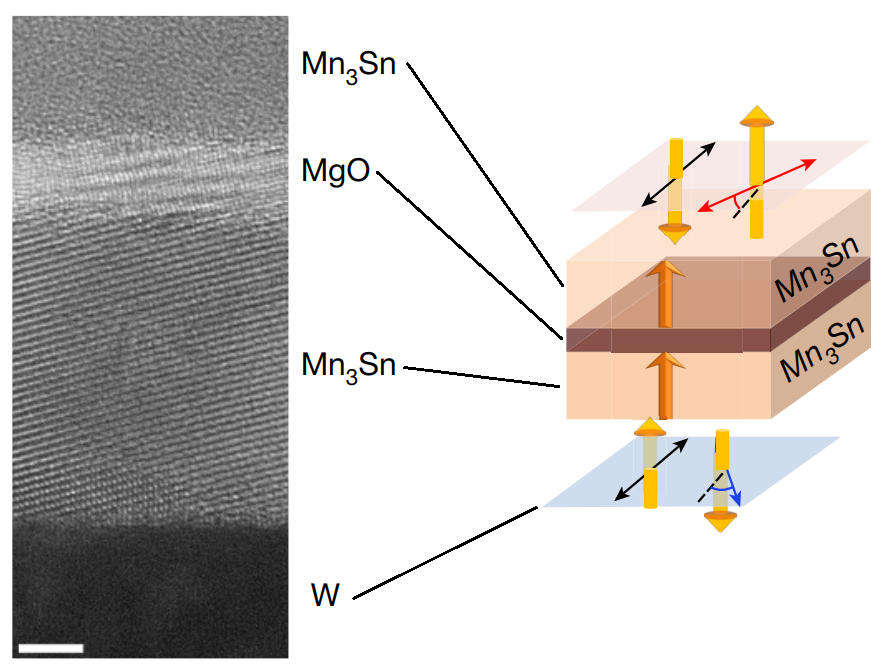
(Left) A chaotic greyscale rectangle. (Right) Isometric view of colored layers sandwiched together.
Antiferromagnetic tunneling junction. High-resolution transmission electron microscopy image of the antiferromagnetic junction showing layers of different materials (left). Diagram showing the materials’ magnetic properties (right). ©2023 Nakatsuji et al. CC-BY

Room temperature quantum magnets switch states trillions of times per second. A class of nonvolatile memory devices, called MRAM, based on quantum magnetic materials, can offer a thousandfold performance beyond current state-of-the-art memory devices. The materials known as antiferromagnets were previously demonstrated to store stable memory states, but were difficult to read from. This new study paves an efficient way for reading the memory states, with the potential to do so incredibly quickly too.

You can probably blink...

Read More


Engineers use Quantum Computing to develop Transparent Window Coating that Blocks Heat, Saves Energy

Notre Dame’s Golden Dome partially photographed through a sample (top left) of the TRC coating.

Cooling accounts for about 15 percent of global energy consumption. Conventional clear windows allow the sun to heat up interior spaces, which energy-guzzling air-conditioners must then cool down. But what if a window could help cool the room, use no energy and preserve the view?

Tengfei Luo, the Dorini Family Professor of Energy Studies at the University of Notre Dame, and postdoctoral associate Seongmin Kim have devised a transparent coating for windows that does just that.

The coating, or transparent radiative cooler (TRC), allows visible light to come in and keeps other heat-producing light out...

Read More

New Quantum Tool Developed in Groundbreaking Experimental Achievement

Advance of Quantum Wave

Scientists recreate properties of light in neutral fundamental particles called neutrons. For the first time in experimental history, researchers at the Institute for Quantum Computing (IQC) have created a device that generates twisted neutrons with well-defined orbital angular momentum. Previously considered an impossibility, this groundbreaking scientific accomplishment provides a brand new avenue for researchers to study the development of next-generation quantum materials with applications ranging from quantum computing to identifying and solving new problems in fundamental physics.

“Neutrons are a powerful probe for the characterization of emerging quantum materials because they have several unique features,” said Dr...

Read More

Seeing Clearly into a New Realm – Researchers Prototype a New Generation of Quantum Microscopy

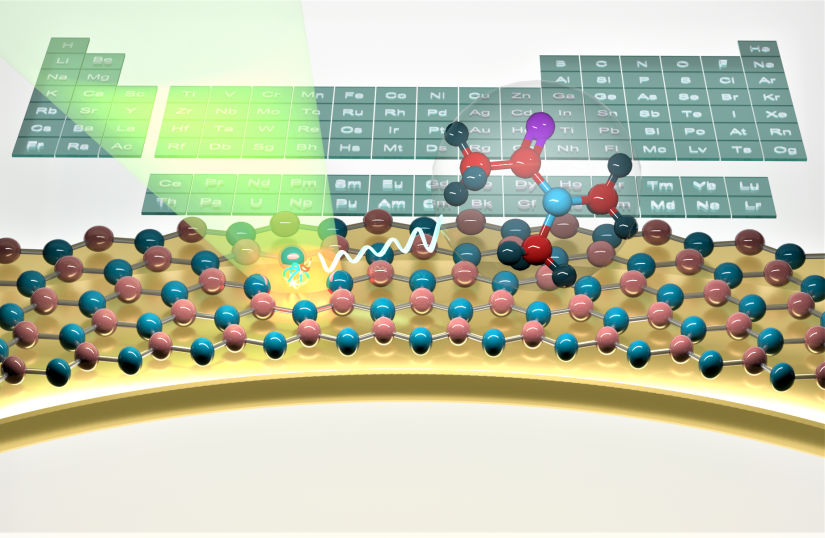
An artist's impression of a quantum microscope for study of chemical reactions and to identify molecular origin. Credit: Dr Mehran Kianinia
An artist’s impression of a quantum microscope for study of chemical reactions and to identify molecular origin. Credit: Dr Mehran Kianinia

With the advance of quantum technologies, new microscopy modalities are becoming possible – ones that can see electric currents, detect fluctuating magnetic fields, and even see single molecules on a surface. A prototype of such a microscope, demonstrating high resolution sensitivity, has been developed by an Australian research team.

While quantum computing seems like the big-ticket item among the developing technologies based on the behaviour of matter and energy on the atomic and subatomic level, another direction promises to open a new door for scientific research itself — quantum microscopy.

With the advance of quantum technologies, new ...

Read More