
Smart windows tagged posts

Transparent OLED advance could improve AR displays and smart windows

A collaborative research team led by professor Yongtaek Hong develops 'high-performance transparent top electrode technology for OLEDs'
Schematic illustration of the high-resolution metal mesh electrode fabrication process on OLED devices and the resulting transparent OLEDs incorporating transparent metal mesh top electrodes. Credit: Materials Horizons (2026). DOI: 10.1039/d5mh02144h

Seoul National University College of Engineering announced that a research team led by Prof. Yongtaek Hong from the Department of Electrical and Computer Engineering has developed a high-performance transparent organic light-emitting diode (OLED) incorporating highly conductive transparent metal mesh top electrodes fabricated using a selective metal deposition technique. The research was published in the journal Materials Horizons and was selected as the outside front cover image for the issue.

Transparent OLEDs have attracted signifi...

Read More
Smart Windows that can Polarize Sunlight could offer a Low Energy Alternative to Wi-Fi

An enlightened route to wireless communications
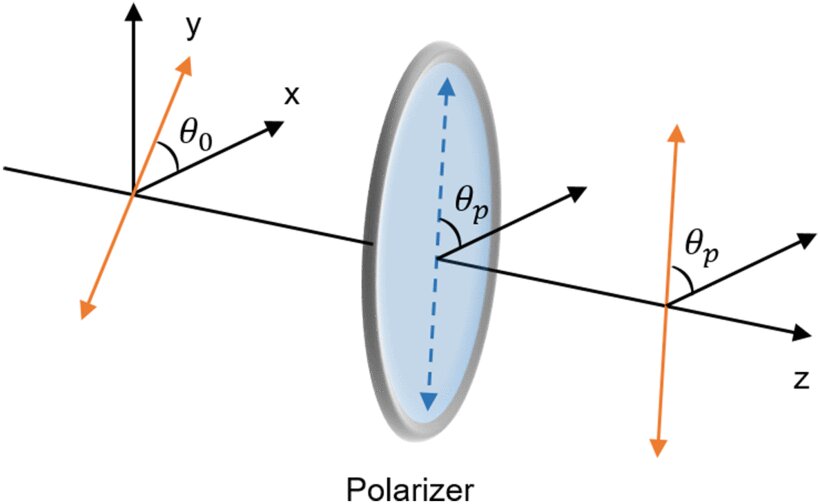
Illustration of the polarizer effect on the polarized light. Credit: IEEE Photonics Journal (2022). DOI: 10.1109/JPHOT.2022.3200833

Sunshine streaming through a window could be directly harnessed for wireless data transmission to electronic devices. KAUST researchers have designed a smart glass system that can modulate the sunlight passing through it, encoding data into the light that can be detected and decoded by devices in the room. The use of sunlight to send data would offer a greener mode of communication compared to conventional Wi-Fi or cellular data transmission.

Basem Shihada had been exploring data encoding into an artificial light source when he had the lightbulb moment to use sunshine...

Read More

Self-Powered System makes Smart Windows Smarter

Graduate student Nicholas Davy holds a sample of the special window glass. (Photos by David Kelly Crow)

Graduate student Nicholas Davy holds a sample of the special window glass. (Photos by David Kelly Crow)

Smart windows equipped with controllable glazing can augment lighting, cooling and heating systems by varying their tint, saving up to 40% in an average building’s energy costs. These smart windows require power for operation, so they are relatively complicated to install in existing buildings. But by applying a new solar cell technology, researchers at Princeton University have developed a different type of smart window: a self-powered version that promises to be inexpensive and easy to apply to existing windows. This system features solar cells that selectively absorb near-UVz light, so the new windows are completely self-powered.

“Sunlight is a mixture of electromagnetic radiation mad...

Read More