
solar flares tagged posts

We can predict space weather—what if we could also stop it?

solar flare
Credit: CC0 Public Domain

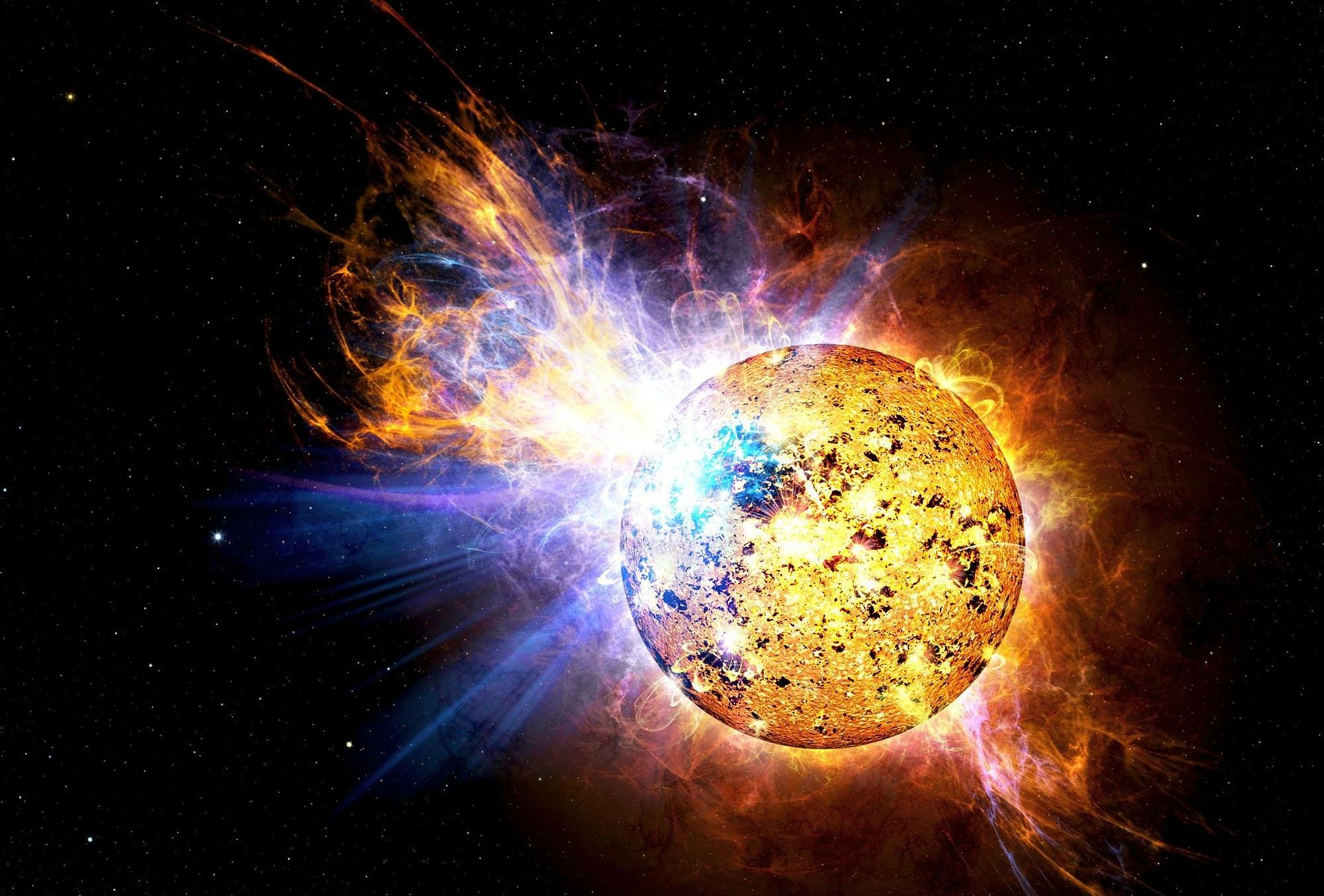
The weather on Earth can get pretty messy sometimes. But in space, it can be wild, and the effects can be far-reaching. Solar flares, giant explosions on the sun, can send out streams of energy that block radio communications and fry satellite electronics. Geomagnetic storms, caused by variations in solar wind, can mess with GPS signals and spark current surges on Earth that overload power grids.

The impact of space weather isn’t limited to temporarily losing electricity or digging out dusty paper maps for directions when satellite navigation systems fail. Every electronic financial transaction in the world, for instance, relies on time stamps sent by satellite systems...

Read More
“This Appears To Be A Universal Law”: 50-Year-Old Mystery About Our Sun’s Storms May Have Been Solved

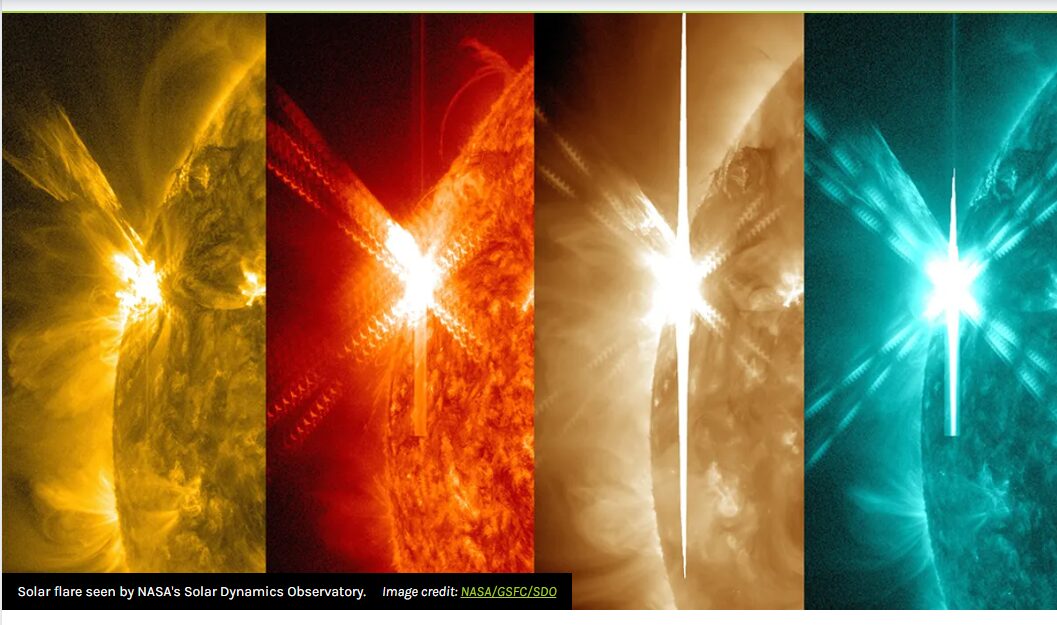
For around half a century, scientists have been puzzled by the odd spectral lines produced by solar flares. Now we may have some answers.
Anew study looking at solar flares may have solved a 50-year-old mystery about our host star, finding that solar flares may be far hotter than we realized.

Solar flares are a common event on the Sun’s surface. They can be seen regularly throughout the year, and particularly during the solar maximum phase of the Sun’s cycle.

“A solar flare is an intense burst of radiation coming from the release of magnetic energy associated with sunspots. Flares are our solar system’s largest explosive events. They are seen as bright areas on the Sun and they can last from minutes to hours,” NASA explains...

Read More

Solar flares may be 6.5 times hotter than previously thought

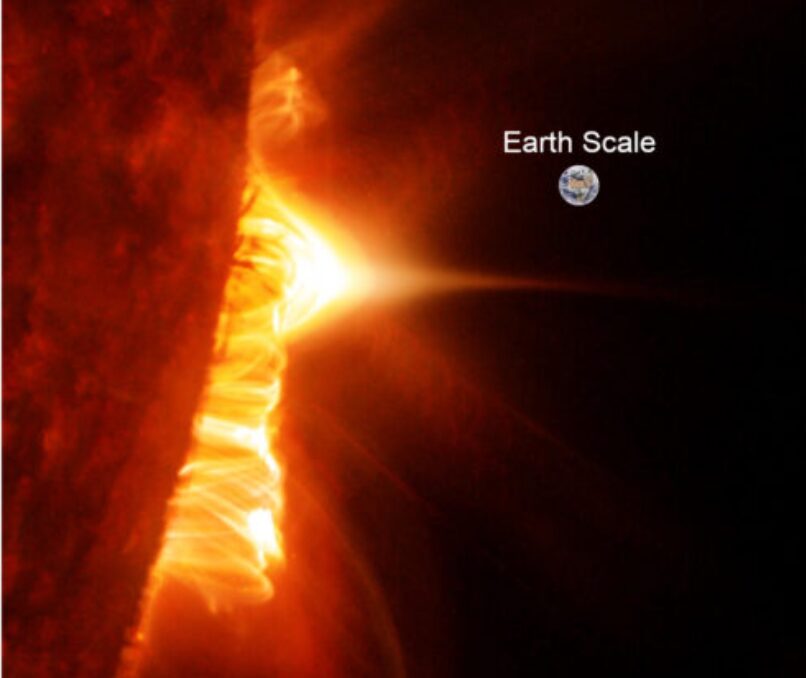
New research from the University of St Andrews has proposed that particles in solar flares are 6.5 times hotter than previously thought. The research provides an unexpected solution to a 50-year-old mystery about our nearest star.

Solar flares are sudden and huge releases of energy in the sun’s outer atmosphere that heat parts of it to greater than 10 million degrees. These dramatic events greatly increase the solar X-rays and radiation reaching Earth and are hazardous to spacecraft and astronauts, as well as affecting our planet’s upper atmosphere.

The research, published in The Astrophysical Journal Letters, looks at evidence of how flares heat solar plasma to greater than 10 million degrees. This solar plasma is made up of ions and electrons...

Read More

Planetary Interiors in TRAPPIST-1 System could be affected by Solar Flares

Credit: NASA/JPL-Caltech

In a recent study published in the Astrophysical Journal Letters, an international team of researchers led by the University of Cologne in Germany examined how solar flares erupted by the TRAPPIST-1 star could affect the interior heating of its orbiting exoplanets.

This study holds the potential to help us better understand how solar flares affect planetary evolution. The TRAPPIST-1 system is an exoplanetary system located approximately 39 light-years from Earth with at least seven potentially rocky exoplanets in orbit around a star that has 12 times less mass than our own sun. Since the parent star is much smaller than our own sun, then the the planetary orbits within the TRAPPIST-1 system are much smaller than our own solar system, as well...

Read More