
supernova tagged posts

Scientists discover Supernova that Outshines all others

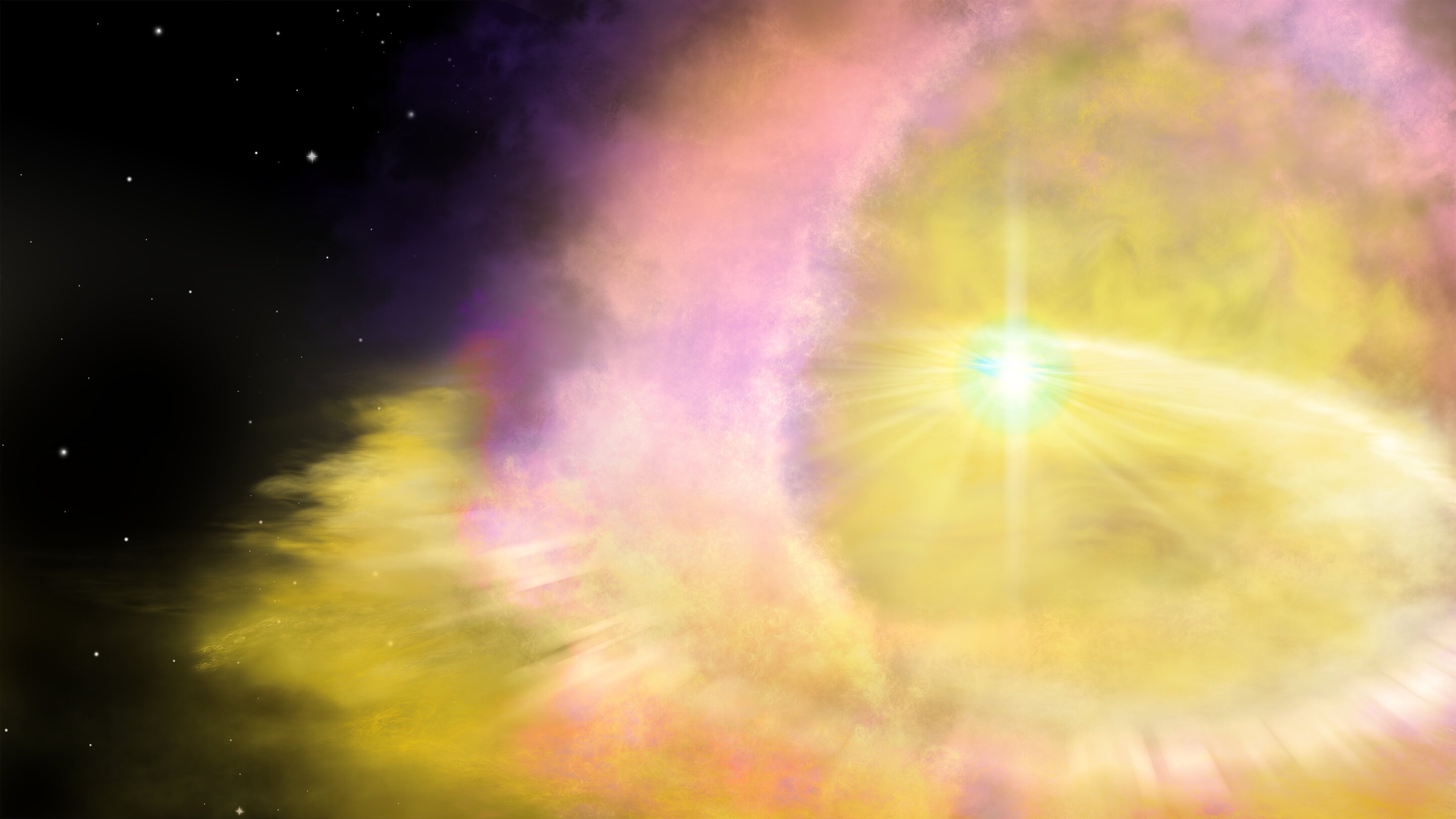
Artist’s impression of a supernova. Credit: Aaron Geller (Northwestern University)

A supernova at least twice as bright and energetic, and likely much more massive than any yet recorded has been identified by an international team of astronomers, led by the University of Birmingham.

The team, which included experts from Harvard, Northwestern University and Ohio University, believe the supernova, dubbed SN2016aps, could be an example of an extremely rare ‘pulsational pair-instability’ supernova, possibly formed from two massive stars that merged before the explosion. Their findings are published today in Nature Astronomy.

Such an event so far only exists in theory and has never been confirmed through astronomical observations.

Dr...

Read More
Electron-eating Neon causes Star to Collapse

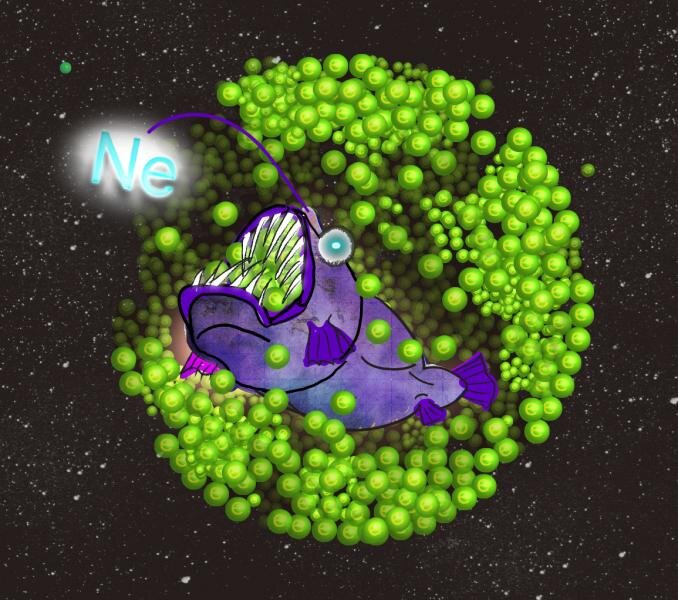
An artist’s impression shows how an imaginary neon footballfish eats away at the electrons inside a star core. Credit: Kavli IPMU

An international team of researchers has found that neon inside a certain massive star can consume the electrons in the core, a process called electron capture, which causes the star to collapse into a neutron star and produce a supernova.

The researchers were interested in studying the final fate of stars within a mass range of eight to 10 solar masses, or eight to 10 times the mass of the sun. This mass range is important because it includes the boundary between whether a star has a large enough mass to undergo a supernova explosion to form a neutron star, or has a smaller mass to form a white dwarf star without becoming a supernova.

An eight- to 1...

Read More

In a rare sighting, astronomers observe Burst of Activity as a Massive Star Forms

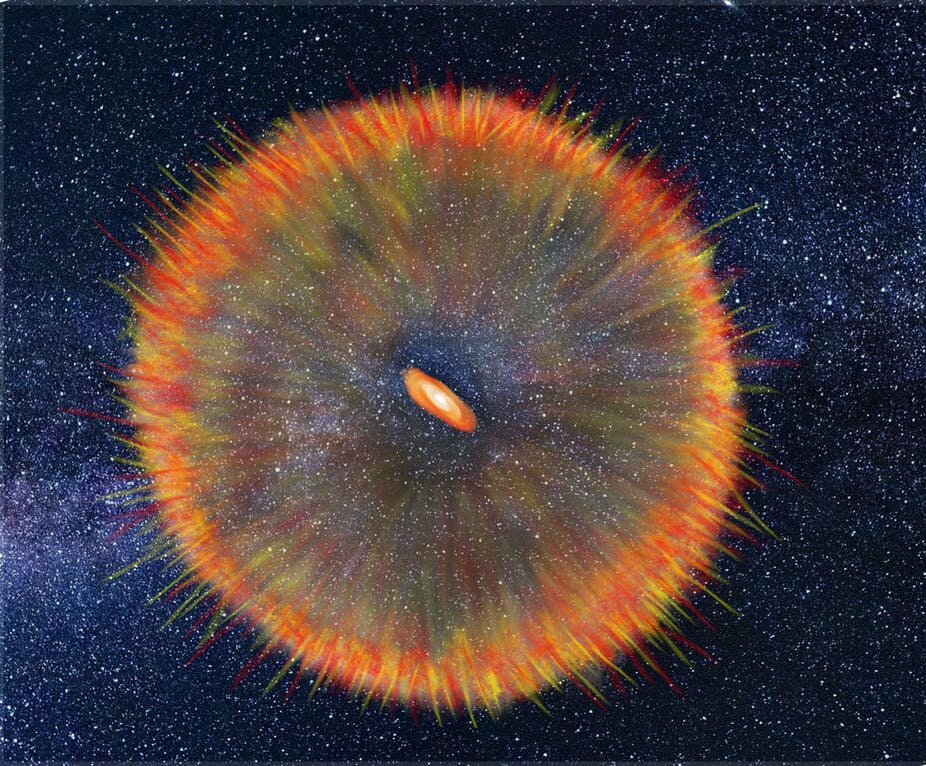
This artist’s impression shows the blast from a heatwave detected in a massive, forming star. Credit: Katharina Immer/JIVE

Here on Earth, we pay quite a lot of attention to the sun. It’s visible to us, after all, and central to our lives. But it is only one of the billions of stars in our galaxy, the Milky Way. It’s also quite small compared to other stars—many are at least eight times more massive.

These massive stars influence the structure, shape and chemical content of a galaxy. And when they have exhausted their hydrogen gas fuel and die, they do so in an explosive event called a supernova. This explosion is sometimes so strong that it triggers the formation of new stars out of materials in the dead star’s surroundings.

But there’s an important gap in our knowledge: as...

Read More

Astronomers find signatures of a ‘Messy’ star that made its companion go Supernova

An X-ray/infrared composite image of G299, a Type Ia supernova remnant in the Milky Way Galaxy approximately 16,000 light years away.
Credit: NASA/Chandra X-ray Observatory/University of Texas/2MASS/University of Massachusetts/Caltech/NSF

Astronomers announced that they have identified the type of companion star that made its partner in a binary system, a carbon-oxygen white dwarf star, explode. Through repeated observations of SN 2015cp, a supernova 545 million light years away, the team detected hydrogen-rich debris that the companion star had shed prior to the explosion.

Many stars explode as luminous supernovae when, swollen with age, they run out of fuel for nuclear fusion...

Read More