supernovae tagged posts

Space Oddity: Uncovering the Origin of the Universe’s Rare Radio Circles

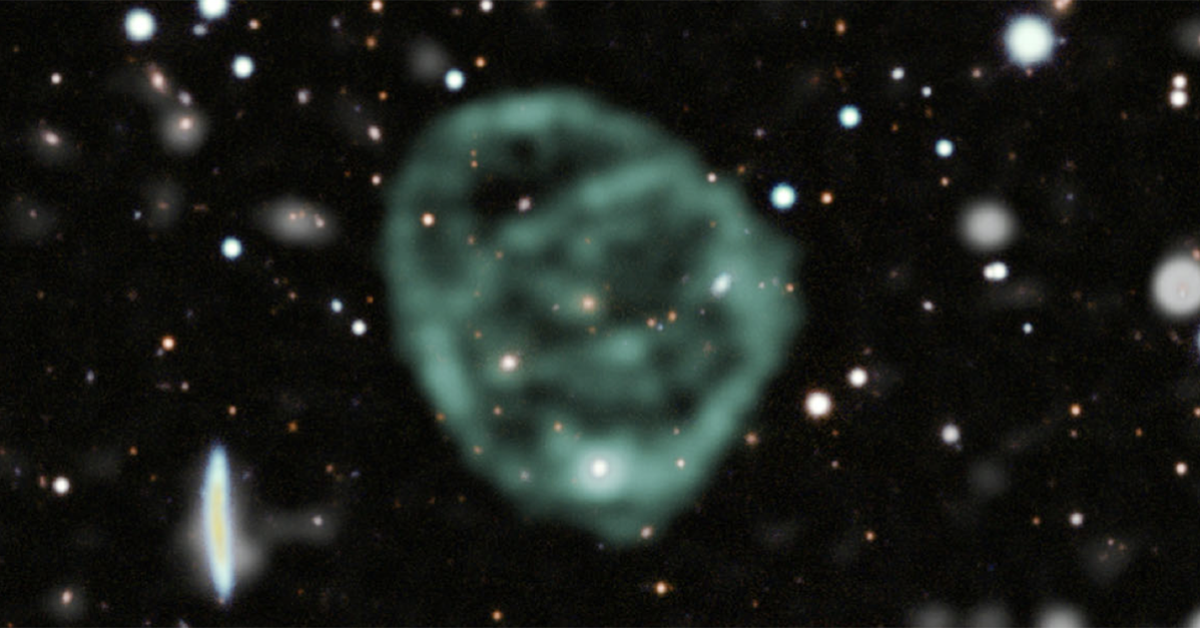
Faint blue circles of light against a starry space background.
Odd radio circles, like ORC 1 pictured above, are large enough to contain galaxies in their centers and reach hundreds of thousands of light years across. (cr: Jayanne English / University of Manitoba)

Outflowing galactic winds from exploding stars may explain the enormous rings. Astronomers believe they may have found the origin of the universe’s giant odd radio circles: they are shells formed by outflowing galactic winds, possibly from massive exploding stars known as supernovae.

t’s not every day astronomers say, “What is that?” After all, most observed astronomical phenomena are known: stars, planets, black holes and galaxies...

Read More
Deep Learning Speeds up Galactic Calculations

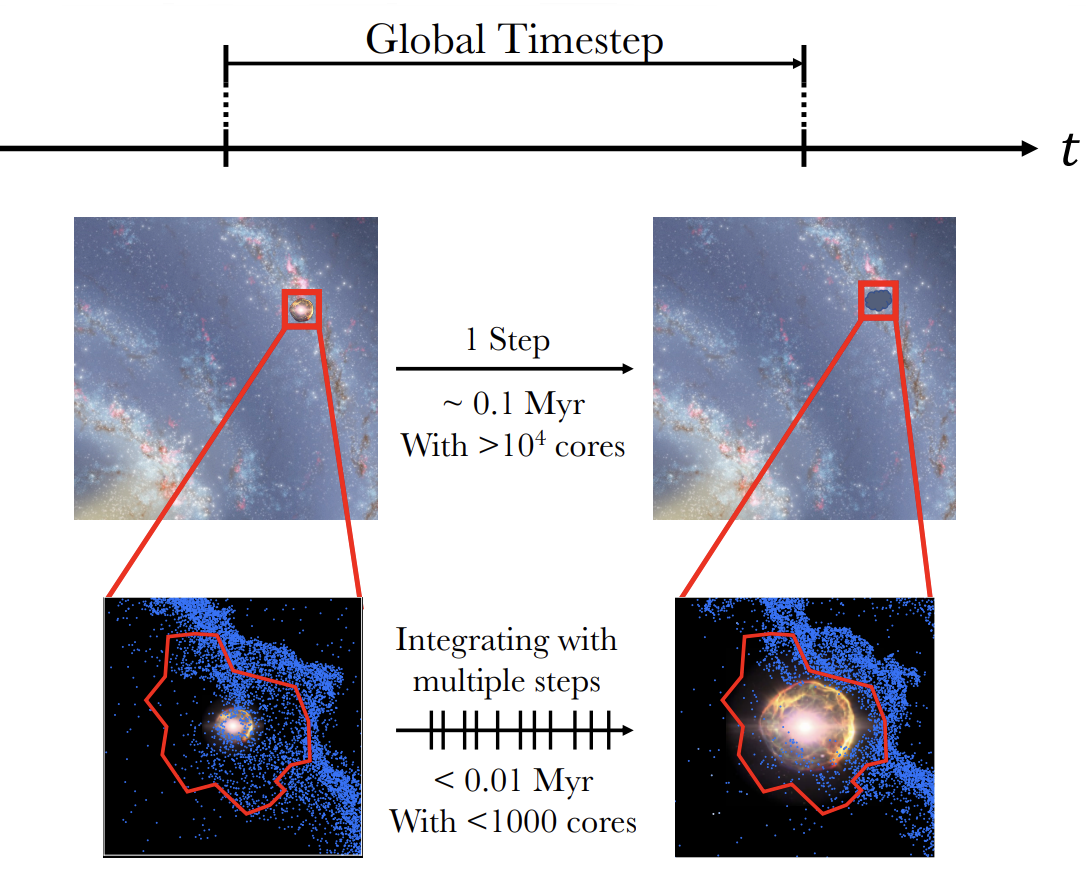
Four square images showing dark backgrounds with stars and galaxies
Divide and conquer. The upper images show a wide area of a galaxy being simulated. The time resolution is very low, in which each “step” of the simulation is around 100,000 years. The lower images show the specific area affected by a supernova explosion and have a finer time resolution where each step is under 10,000 years. These regions are combined with the more general simulation to improve the overall accuracy and efficiency of the simulation. ©2023 Hirashima et al., NASA/JPL-Caltech/ESO/R. Hunt/Hubble/L. Calçada CC-BY-ND

A new way to simulate supernovae may help shed light on our cosmic origins. Supernovae, exploding stars, play a critical role in the formation and evolution of galaxies...

Read More

Using Supernovae to study Neutrinos’ Strange Properties

When supernovae explode, neutrinos from their core carry enormous amounts of energy in all directions.
Photo: Getty Images

New study offers hope to long-standing scientific problem. In a new study, researchers have taken an important step toward understanding how exploding stars can help reveal how neutrinos, mysterious subatomic particles, secretly interact with themselves.

One of the less well-understood elementary particles, neutrinos rarely interact with normal matter, and instead travel invisibly through it at almost the speed of light. These ghostly particles outnumber all the atoms in the universe and are always passing harmlessly through our bodies, but due to their low mass and lack of an electric charge they can be incredibly difficult to find and study.

But in a study p...

Read More

Study Predicts Black Hole Chirps occur in Two Universal Frequency Ranges

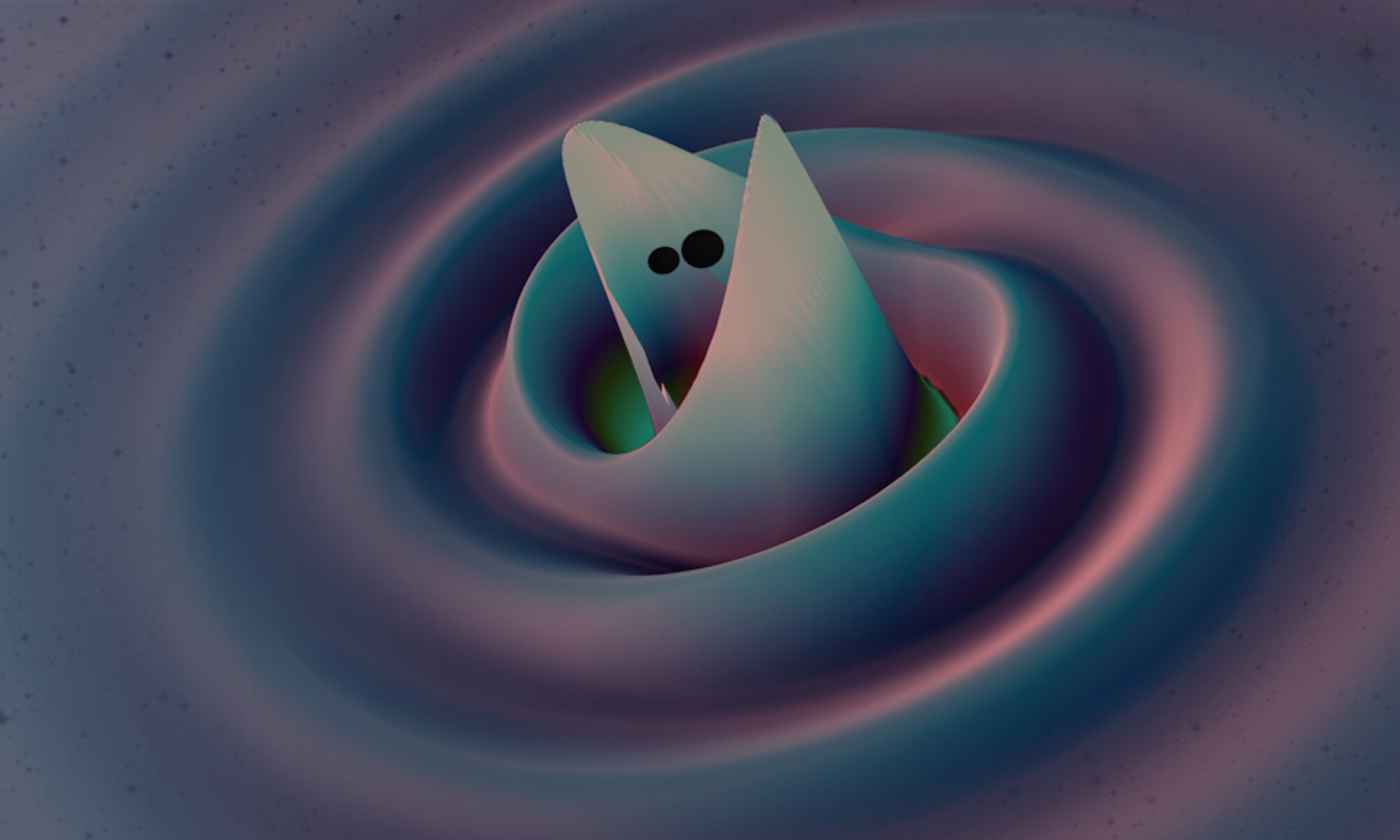
The universal sound of black holes
Ripples in the spacetime around a merging binary black-hole system from a numerical relativity simulation. Credit: Deborah Ferguson, Karan Jani, Deirdre Shoemaker, Pablo Laguna, Georgia Tech, MAYA Collaboration

They are mysterious, exciting and inescapable—black holes are some of the most exotic objects in the universe. With gravitational-wave detectors, it is possible to detect the chirp sound that two black holes produce when they merge, approximately 70 such chirps have been found so far.

A team of researchers at the Heidelberg Institute for Theoretical Studies (HITS) now predicts that in this “ocean of voices” chirps preferentially occur in two universal frequency ranges. The study has been published in The Astrophysical Journal Letters.

The discovery of gravitational waves...

Read More