Uranus tagged posts

A bizarre new state of matter may be hiding inside Uranus and Neptune

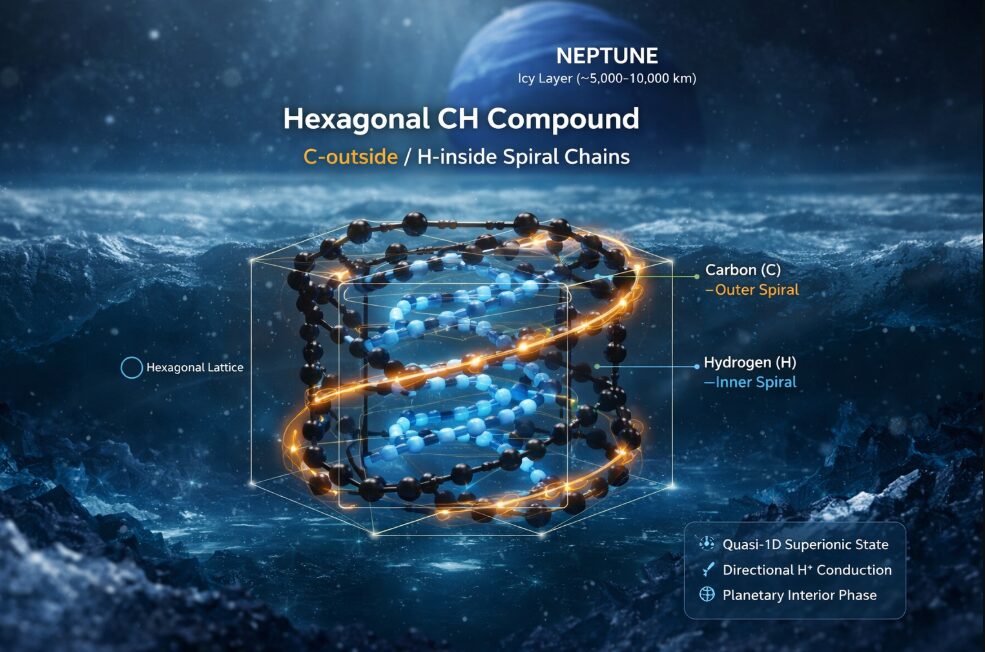
Deep inside planets like Uranus and Neptune, scientists may have uncovered a bizarre new state of matter where atoms behave in unexpected ways. Advanced simulations suggest that carbon and hydrogen, under crushing pressures and scorching temperatures, can form a strange hybrid phase—part solid, part fluid—where hydrogen atoms spiral through a rigid carbon framework. This unusual “superionic” structure could reshape how heat and electricity flow inside these distant worlds, potentially helping explain their mysterious magnetic fields.

The deep interiors of ice giant planets such as Uranus and Neptune may contain a previously unknown form of matter. This possibility comes from new computer simulations conducted by Carnegie scientists Cong Liu and Ronald Cohen.

Their study,...

Read More

Uranus and Neptune are hiding something big beneath the blue

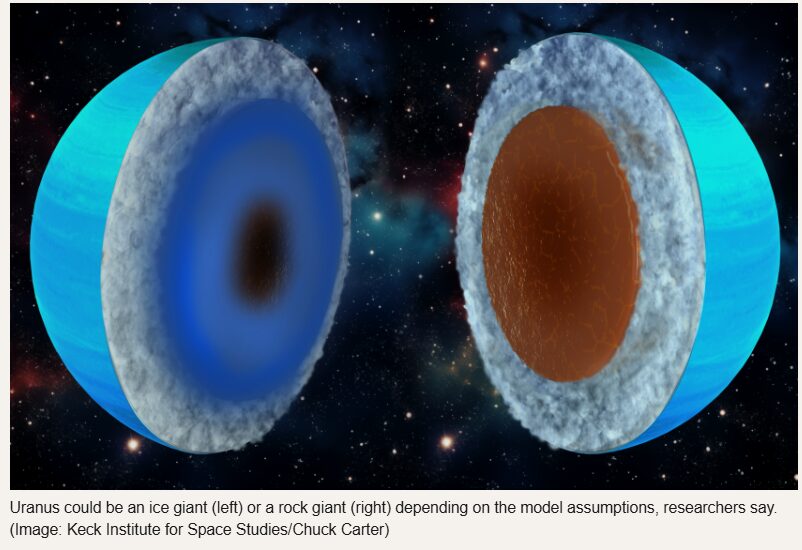
Uranus and Neptune may not be the icy worlds we’ve long imagined. A new Swiss-led study uses innovative hybrid modeling to reveal that these planets could just as easily be dominated by rock as by water-rich ices. The findings also help explain their bizarre, multi-poled magnetic fields and open the door to a wider range of possible interior structures. But major uncertainties remain, and only future space missions will The Solar System is commonly grouped by planetary composition: four rocky terrestrial planets (Mercury, Venus, Earth and Mars), two massive gas giants (Jupiter and Saturn), and a pair of ice giants (Uranus and Neptune)...

Read More

Starship could cut the travel time to Uranus in half

Starship could cut the travel time to Uranus in half
Image of Uranus and its rings from JWST. Credit: NASA

The ice giants remain some of the most interesting places to explore in the solar system. Uranus in particular has drawn a lot of interest lately, especially after the 2022 Decadal Survey from the National Academies named it as the highest priority destination. But as of now, we still don’t have a fully fleshed out and planned mission ready to go for the multiple launch windows in the 2030s.

That might actually be an advantage, though, as a new system coming online might change the overall mission design fundamentally...

Read More

Voyager missed it, but now we know Uranus has a fiery secret

For decades, scientists puzzled over why Uranus seemed colder than expected. Now, an international research team led by the University of Houston has solved the mystery: Uranus emits more heat than it gets from the Sun, meaning it still carries internal warmth from its ancient formation. This revelation rewrites what scientists know about the ice giant’s history, strengthens the case for NASA’s upcoming mission, and offers fresh insight into the forces shaping not only other planets, but also Earth’s future climate.

A new study led by University of Houston researchers, in collaboration with planetary scientists worldwide, suggests Uranus does have its own internal heat — an advance that not only informs NASA’s future missions but also deepens scientists’ understanding of plan...

Read More