Four planetary nebulae as seen by Hubble, showing four of many nebular morphologies. Astrononers used high spatial resolution millimeter-wavelength images of molecules in the winds of fourteen planetary nebulae to conclude that the widely varing shapes of planetary nebulae are primarily the result of the evolution of central stars with orbiting binary companions. NASA/HST
About 7.5 billion years from now, our sun will have converted most of its hydrogen fuel into helium through fusion, and then burned most of that helium into carbon and oxygen. It will have swollen to a size large enough to fill the solar system nearly to the current orbit of Mars, and lost almost half of its mass in winds...
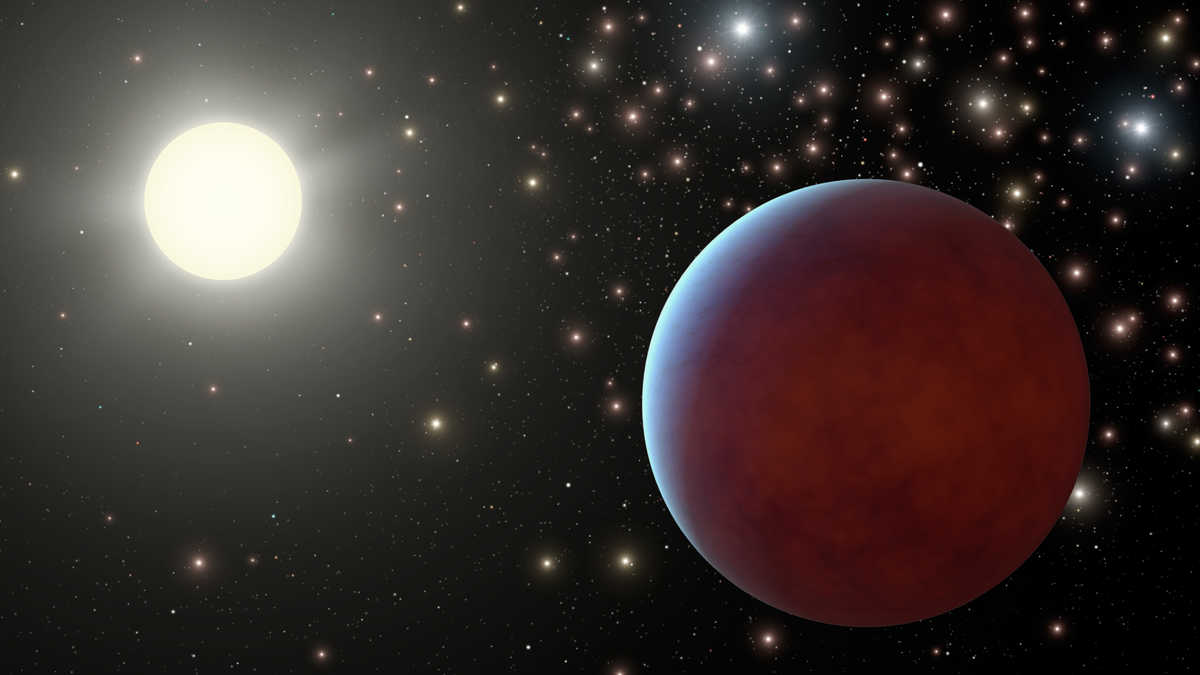
Courtesy of NASA/JPL-Caltech A Southwest Research Institute scientist has identified stellar phosphorus as a probable marker in narrowing the search for life in the cosmos. Stars with phosphorus levels similar to the Sun are considered more likely to host rocky planets with the potential to host life as we know it.
Stellar chemical compositions used as proxy for potentially habitable systems. A Southwest Research Institute scientist has identified stellar phosphorus as a probable marker in narrowing the search for life in the cosmos...
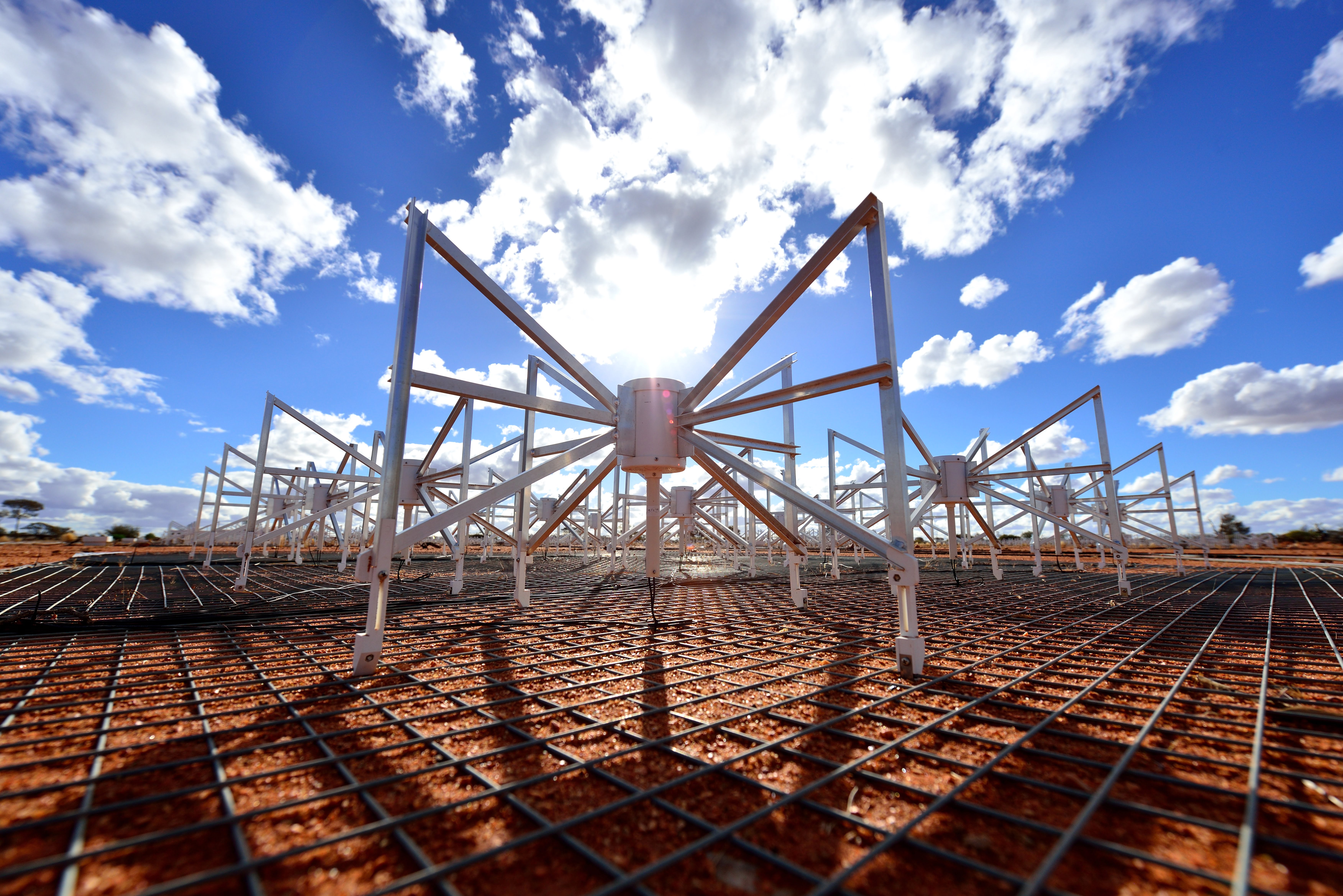
Dipole antennas of the Murchison Widefield Array (MWA) radio telescope in Mid West Western Australia. Credit: Dragonfly Media.
A radio telescope in outback Western Australia has completed the deepest and broadest search at low frequencies for alien technologies, scanning a patch of sky known to include at least 10 million stars. Astronomers used the Murchison Widefield Array (MWA) telescope to explore hundreds of times more broadly than any previous search for extraterrestrial life.
The study, published today in Publications of the Astronomical Society of Australia, observed the sky around the Vela constellation. But in this part of the Universe at least, it appears other civilisations are elusive, if they exist.
The research was conducted by CSIRO astronomer Dr Chenoa Tremblay a...
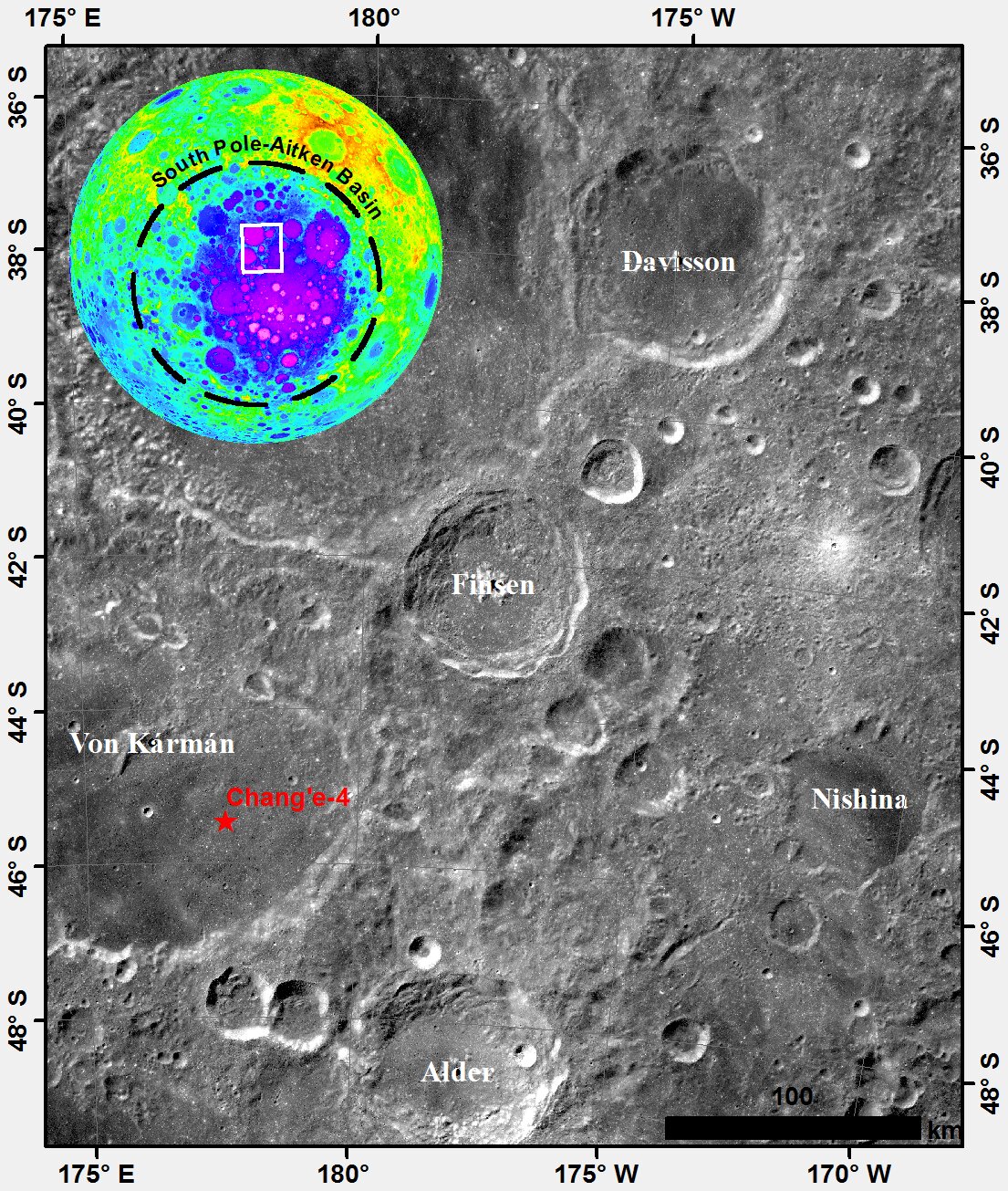
Context map of Chang’e-4 landing site. Credit: AIR
The absolute model age (AMA), or geologic age of Finsen crater on the moon’s far side is determined to be about 3.5 billion years (Ga) based on crater counting method, according to a study published in Icarus.
The study was conducted by a research team led by Prof. Di Kaichang from the State Key Laboratory of Remote Sensing Sciences, Aerospace Information Research Institute (AIR) of the Chinese Academy of Sciences (CAS).
Based on this model age, the regolith growth rate at the Chang’e-4 landing site and the crater degradation rate within Finsen crater have also been estimated.
China’s Chang’e-4 probe, including a lander and a rover, successfully touched down the floor of Von Kármán crater within the South Pole-Aitken (SPA) bas...





Recent Comments