Category Astronomy/Space

What if mysterious ‘Cotton Candy’ Planets actually sport Rings?

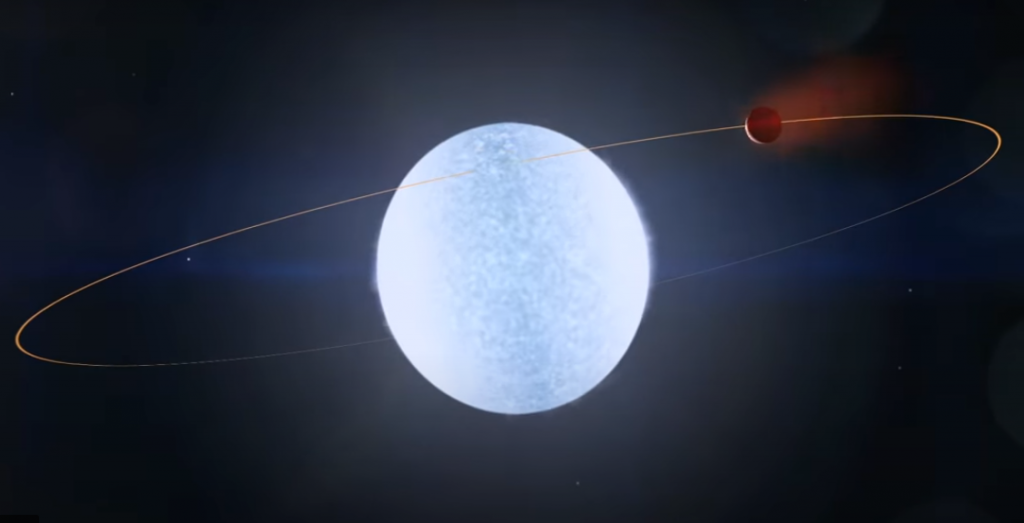
An artist’s conception of Piro and Vissapragada’s model of a ringed planet transiting in front of its host star. They used these models to constrain which of the known super-puffs could be explained by rings. Illustration is by Robin Dienel and courtesy of the Carnegie Institution for Science.

Some of the extremely low-density, “cotton candy like” exoplanets called super-puffs may actually have rings, according to new research published in The Astronomical Journal by Carnegie’s Anthony Piro and Caltech’s Shreyas Vissapragada

Super-puffs are notable for having exceptionally large radii for their masses – which would give them seemingly incredibly low densities...

Read More

Physicists model the Supernovae that result from Pulsating Supergiants like Betelgeuse

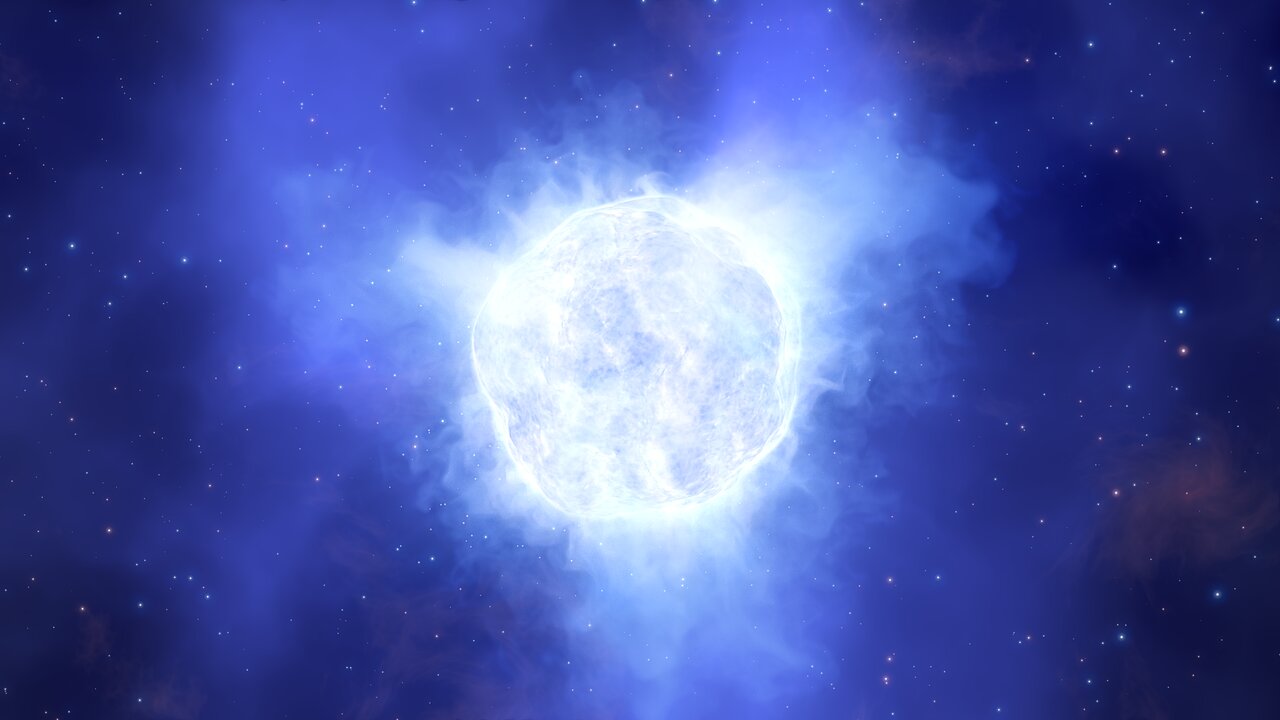
Unlike most stars, Betelgeuse is large enough and close enough for scientists to resolve with instruments like the ALMA telescope. Credit: ALMA (ESO/NAOJ/NRAO)

Betelgeuse has been the center of significant media attention lately. The red supergiant is nearing the end of its life, and when a star over 10 times the mass of the Sun dies, it goes out in spectacular fashion. With its brightness recently dipping to the lowest point in the last hundred years, many space enthusiasts are excited that Betelgeuse may soon go supernova, exploding in a dazzling display that could be visible even in daylight.

While the famous star in Orion’s shoulder will likely meet its demise within the next million years—practically couple days in cosmic time—scientists maintain that its dimming is due to th...

Read More

Large Exoplanet could have the Right Conditions for Life

Nikku Madhusudhan et al. ‘The interior and atmosphere of the habitable-zone exoplanet K2-18b.’ The Astrophysical Journal Letters (2020). DOI: 10.3847/2041-8213/ab7229 

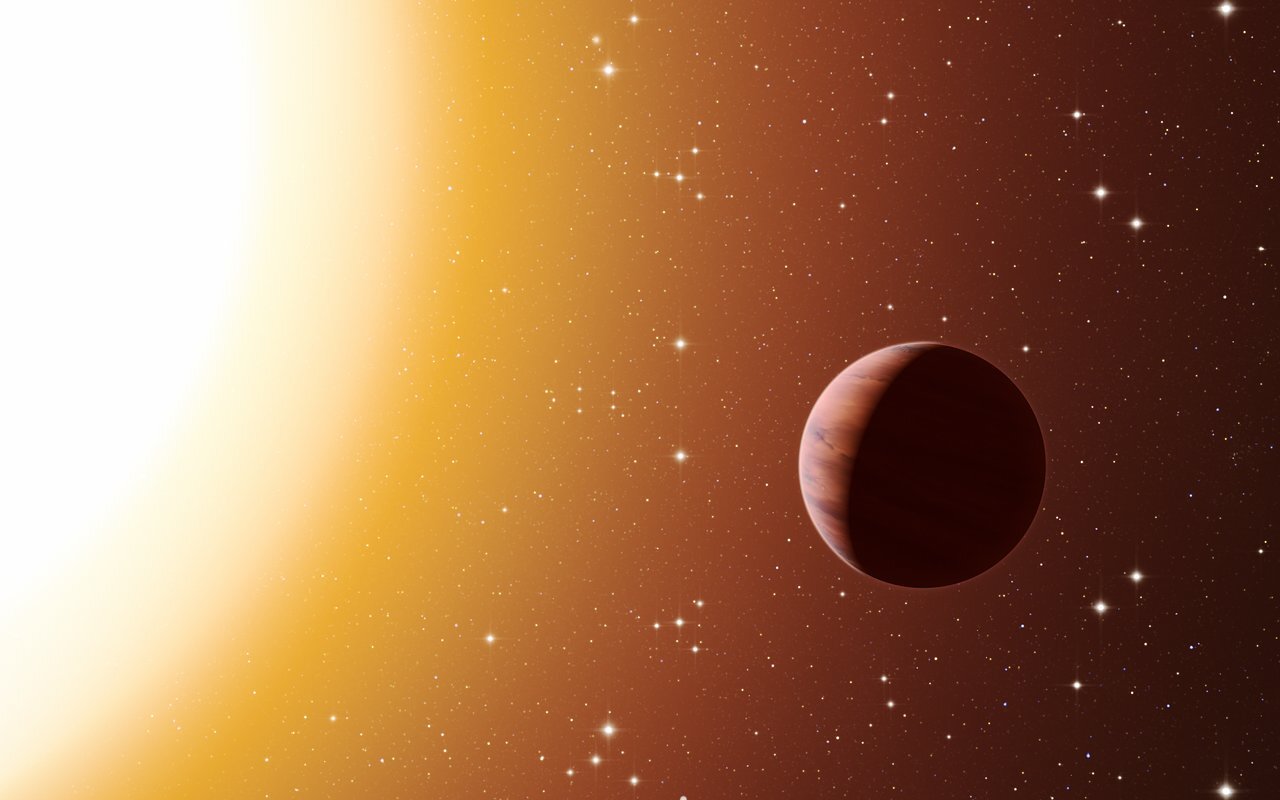
Astronomers have found an exoplanet more than twice the size of Earth to be potentially habitable, opening the search for life to planets significantly larger than Earth but smaller than Neptune.

A team from the University of Cambridge used the mass, radius, and atmospheric data of the exoplanet K2-18b and determined that it’s possible for the planet to host liquid water at habitable conditions beneath its hydrogen-rich atmosphere. The results are reported in The Astrophysical Journal Letters.

The exoplanet K2-18b, 124 light-years away, is 2.6 times the radius and 8...

Read More

The Force is Strong in Neutron Stars

Researchers from MIT and elsewhere have compared “snapshots” of pairs of nucleons separated by various distances, and for the first time observed a key transition in the behavior of the strong nuclear force — the glue that binds the building blocks of matter.
Image credit: JLab

A new study identifies a transition in the strong nuclear force that illuminates the structure of a neutron star’s core. Most ordinary matter is held together by an invisible subatomic glue known as the strong nuclear force – one of the four fundamental forces in nature, along with gravity, electromagnetism, and the weak force. The strong nuclear force is responsible for the push and pull between protons and neutrons in an atom’s nucleus, which keeps an atom from collapsing in on itself.

In atomic nucl...

Read More