
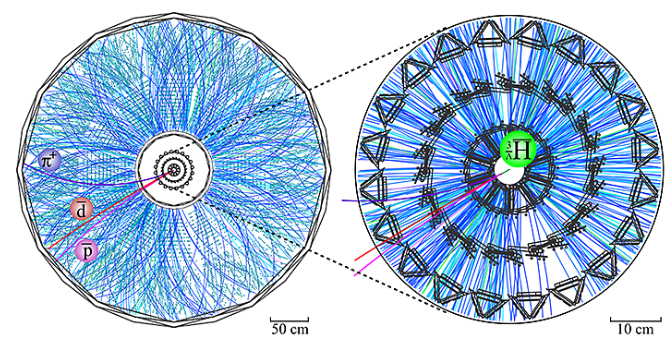
New results from precision particle detectors at the Relativistic Heavy Ion Collider (RHIC) offer a fresh glimpse of the particle...
Read More

New results from precision particle detectors at the Relativistic Heavy Ion Collider (RHIC) offer a fresh glimpse of the particle...
Read More
March 12, 2020,
 Astronomy/Space

Researchers using ESO’s Very Large Telescope (VLT) have observed an extreme planet where they suspect it rains iron. The ultra-hot giant exoplanet has a day side where temperatures climb above 2400 degrees Celsius, high enough to vaporise metals. Strong winds carry iron vapour to the cooler night side where it condenses into iron droplets.
“One could say that this planet gets rainy in the evening, except it rains iron,” says David Ehrenreich, a professor at the University of Geneva in Switzerland. He led a study, published today in the journal Nature, of this exotic exoplanet. Known as WASP-76b, it is located some 640 light-years away in the constellation of Pisces.
This strange phenomenon happens because the ‘iron rain’ plane...
Read More
March 12, 2020,
Astronomy/Space
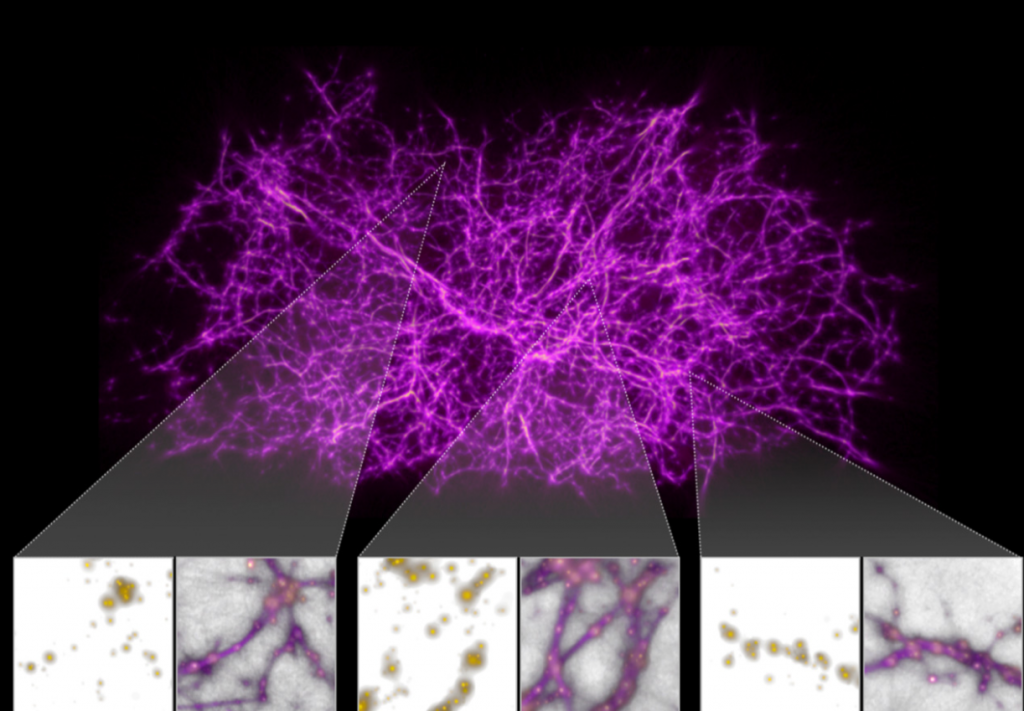
The problem-solving prowess of a simple slime mold has been harnessed to trace the large-scale structure of the universe. A computational approach inspired by the growth patterns of a bright yellow slime mold has enabled a team of astronomers and computer scientists at UC Santa Cruz to trace the filaments of the cosmic web that connects galaxies throughout the universe.
Their results, publishe...
Read More
March 10, 2020,
Astronomy/Space, Environment/Geology

Before the Taqba Dam impounded the Euphrates River in northern Syria in the 1970s, an archaeological site named Abu Hureyra bore witness to the moment ancient nomadic people first settled down and started cultivating crops. A large mound marks the settlement, which now lies under Lake Assad.
But before the lake formed, archaeologists were able to carefully extract and describe much material, including parts of houses, food and tools — an abundance of evidence that allowed them to identify the transition to agriculture nearly 12,800 years ago. It was one of the most significant events in our Earth’s cultural and environmental history.
Abu Hureyra, it turns out, has another story to tell...
Read More
Recent Comments