Category Chemistry/Nanotechnology

Controlling the Degree of Twist in Nanostructured Particles for the First Time

For the first time, controlling the degree of twist in nanostructured particles
The graphic shows light waves approaching the twisted metal bowties and being turned by the bowtie shape. The ability to control the degree of twist in a curling, nanostructured material could be a useful new tool in chemistry and machine vision. Credit: Ella Maru Studio

Micron-sized “bow ties,” self-assembled from nanoparticles, form a variety of different curling shapes that can be precisely controlled, a research team led by the University of Michigan has shown.

The development opens the way for easily producing materials that interact with twisted light, providing new tools for machine vision and producing medicines.

While biology is full of twisted structures like DNA, known as chiral structures, the degree of twist is locked in—trying to change it breaks the structure...

Read More

Scientists Transform Algae into Unique Functional Perovskites with Tunable Properties

Calcitic shells of the dinoflagellate L. granifera. A) The calcitic shells of L. granifera exhibiting a porous ultrastructure. B) A single shell of L. granifera. C) Raman spectrum from a single shell confirming its calcitic nature. D) Electron back-scattering diffraction (EBSD) map and E) a corresponding (0001) pole figure of a single polished shell demonstrating that it consists of single crystalline domains where the c-axis of calcite is pointing radially from the center of the shell outwards. The colors in (E) correlate with similarly colored areas in (D). Scale bars: (A) 50 µm, (B) 5 µm and (D) is 5 µm.

Perovskites are materials that are increasingly popular for a wide range of applications because of their remarkable electrical, optical, and photonic properties...

Read More

‘Game-changing’ findings for Sustainable Hydrogen Production

Hydrogen

Hydrogen fuel could be a more viable alternative to traditional fossil fuels according to University of Surrey researchers who have found that a type of metal-free catalysts could contribute to the development of cost-effective and sustainable hydrogen production technologies.

The study has shown promising results for the use of edge-decorated nanocarbons as metal-free catalysts for the direct conversion of methane, which is also a powerful greenhouse gas, into hydrogen. Among the nano carbons investigated, nitrogen-doped nano carbons presented the highest level of performance for hydrogen production at high temperatures.

Crucially, the researchers also found that the nitrogen-doped and phosphorus-doped nano carbons had strong resistance to carbon poisoning, which is a common is...

Read More

Plasma-Structural Coloring: A New Colorful approach to an Inkless Future

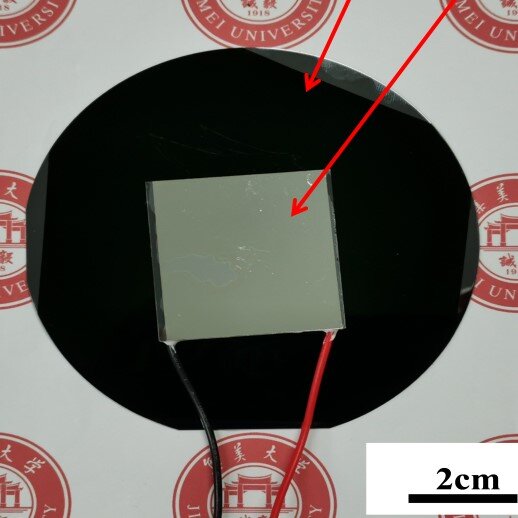
(a) Scheme illustrating the “plasma-structural coloring”; (b) The picture of a letter “A” written by a pencil; (c) The picture of the sample after the plasma irradiation for 80 seconds.

Classic graphite pencils can be used and transformed into colorful works using plasma irradiation, without a drop of colored ink used. New developments for achieving structural coloring through plasma irradiation of graphite can reduce the reliance upon harmful color dyes. Colors achieved by plasma irradiation are completely erasable and can be manipulated using time exposed to the plasma irradiation, intensity of the irradiation and the thickness of the graphite layer applied...

Read More