Category Physics

New Catalyst could Dramatically Cut Methane Pollution from Millions of Engines

 Simulated Pd/CeO2 interfacial evolution in response to reaction conditions.

Researchers demonstrate a way to remove the potent greenhouse gas from the exhaust of engines that burn natural gas. Today’s catalysts for removing unburnt methane from natural-gas engine exhaust are either inefficient at low, start-up temperatures or break down at higher operating temperatures. A new single-atom catalyst solves both these problems and removes 90% of the methane.

Individual palladium atoms attached to the surface of a catalyst can remove 90% of unburned methane from natural-gas engine exhaust at low temperatures, scientists reported today in the journal Nature Catalysis.

While more research needs to be done, they said, the advance in single atom catalysis has the potential to lower exhau...

Read More
‘Stunning’ discovery: Metals can Heal Themselves

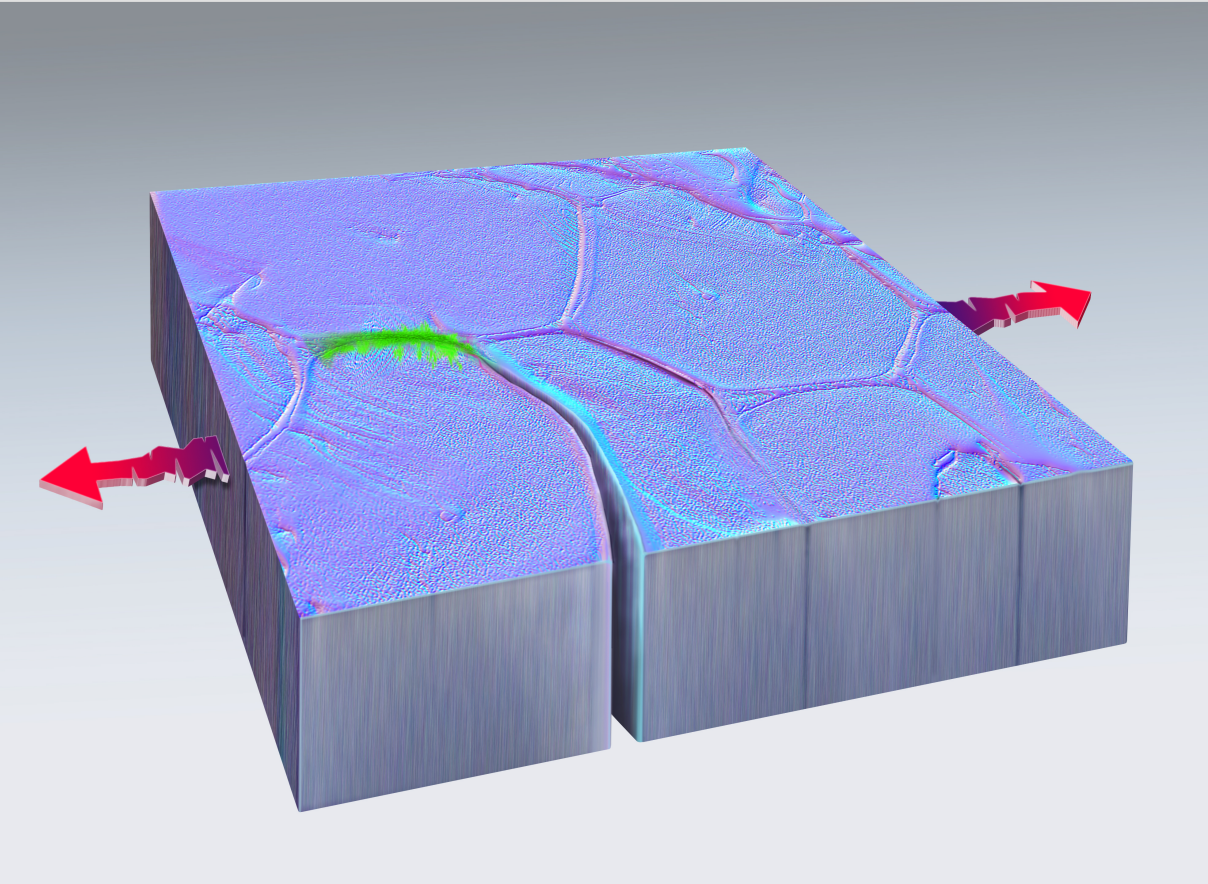
Green marks the spot where a fissure formed, then fused back together in this artistic rendering of nanoscale self-healing in metal, discovered at Sandia National Laboratories. Red arrows indicate the direction of the pulling force that unexpectedly triggered the phenomenon. (Image by Dan Thompson)

Microscopic cracks vanish in experiments, revealing possibility of self-healing machines. If harnessed, the newly discovered phenomenon could someday lead to engines, bridges and airplanes that reverse damage caused by wear and tear, making them safer and longer-lasting.

The research team from Sandia National Laboratories and Texas A&M University described their findings today in the journal Nature.

“This was absolutely stunning to watch first-hand,” said Sandia materials scientist Br...

Read More

Researchers Achieve Historic Milestone in Energy Capacity of Supercapacitors

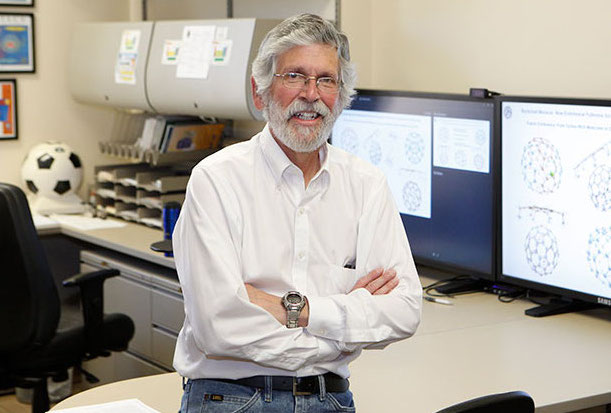
A landmark study led by Luis Echegoyen, Ph.D., professor emeritus at The University of Texas at El Paso, and Marta Plonska-Brzezinska, Ph.D., of the Medical University of Bialystok, Poland (not pictured), was recently featured in the journal Scientific Reports, which is published by leading research publisher Nature Portfolios. It describes how they have achieved the highest level of energy storage — also known as capacitance — in a supercapacitor ever recorded.

Scientific community inches closer to ultrafast-charging energy storage. In a new landmark chemistry study, researchers describe how they have achieved the highest level of energy storage — also known as capacitance — in a supercapacitor ever recorded.

The study, led by Luis Echegoyen, Ph.D...

Read More

Researchers introduce Transparent Optical Imager with Near-Infrared Sensitivity and Touchless Interface

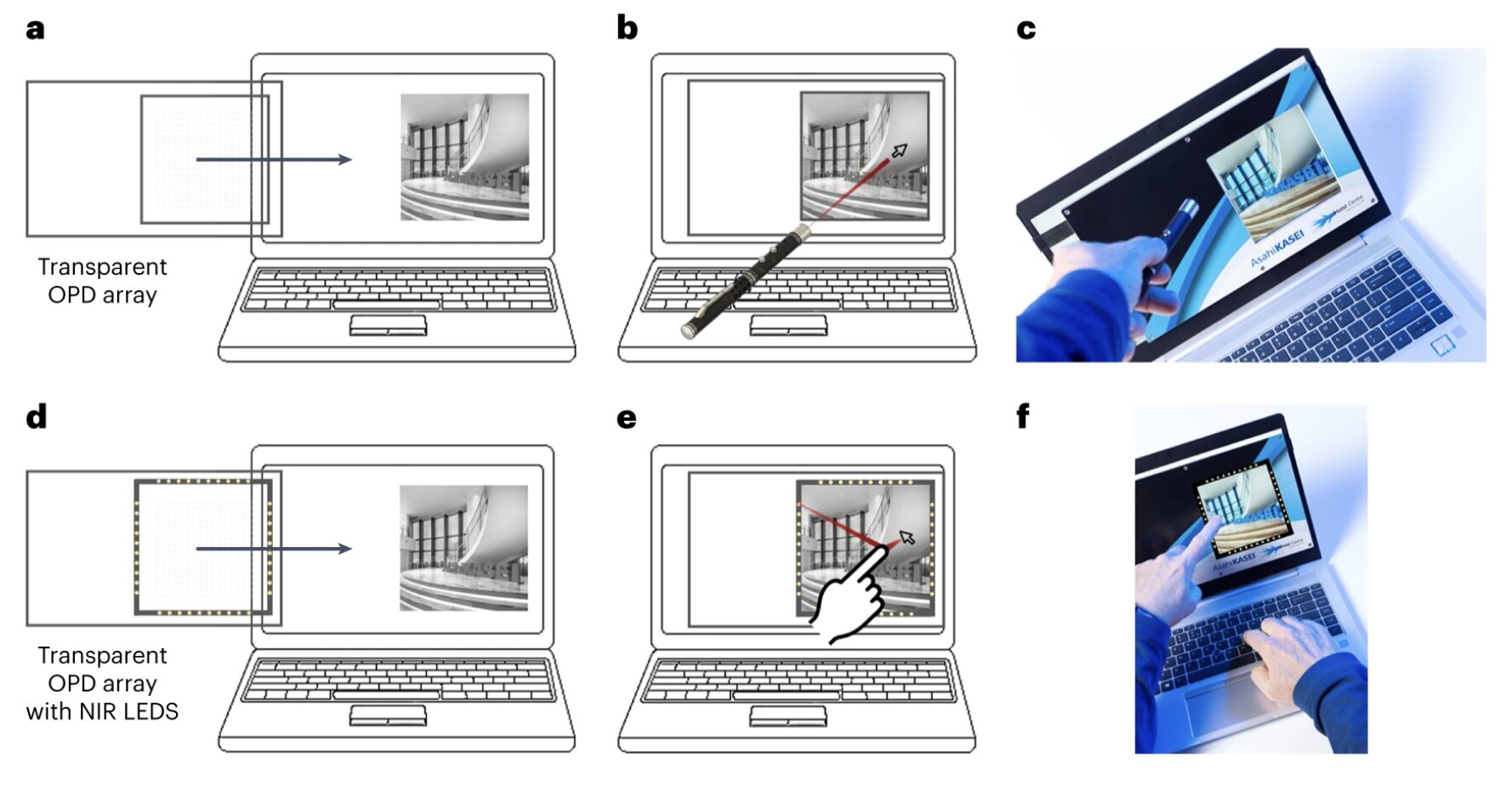
A transparent optical imager with near-infrared sensitivity and a touchless interface
a, Schematic of a large-area, 16 × 16 visually transparent NIR-sensitive OPD array (imager) that is placed in front of a laptop display. b, Schematic of the touchless user interface demo using NIR-emitting penlight. c, Photograph of the touchless user interface demo using NIR-emitting penlight. d, Schematic of a large-area, 16 × 16 visually transparent NIR-sensitive OPD array (imager) with integrated NIR LEDs that is placed in front of a laptop display. e, Schematic of the touchless user interface demo using gesture recognition of reflected NIR light. f, Photograph of the touchless user interface demo using gesture recognition of reflected NIR light. Credit: Nature Electronics (2023). DOI: 10.1038/s41928-023-00970-8

Most existing devices are operated via the sense of touch,...

Read More