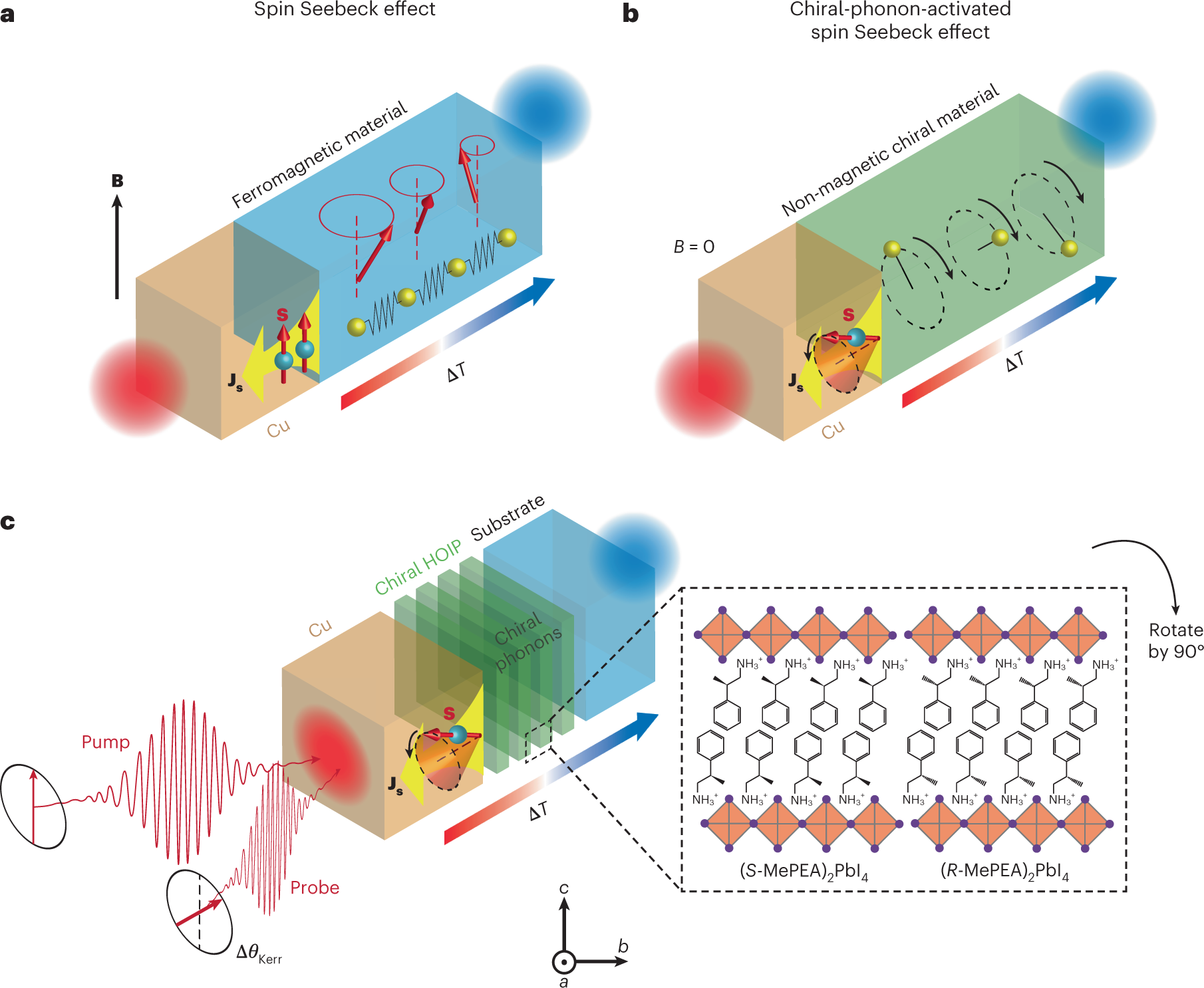
Illustration of potential applications of combining pyroelectric materials and the localized thermo-plasmonic effect of noble metal nanomaterials. Photo credit: Dr Lei Dangyuan’s group / City University of Hong Kong
Pyroelectric catalysis (pyro-catalysis) can convert environmental temperature fluctuations into clean chemical energy, like hydrogen. However, compared with the more common catalysis strategy, such as photocatalysis, pyro-catalysis is inefficient due to slow temperature changes in the ambient environment...
Optical fibres developed by physicists at Bath will make communications networks more robust
An optical fiber that uses the mathematical concept of topology to remain robust, thereby guaranteeing the high-speed transfer of information, has been created by physicists.
Optical fibres are the backbone of our modern information networks. From long-range communication over the internet to high-speed information transfer within data centres and stock exchanges, optical fibre remains critical in our globalised world.
Fibre networks are not, however, structurally perfect, and information transfer can be compromised when things go wrong...
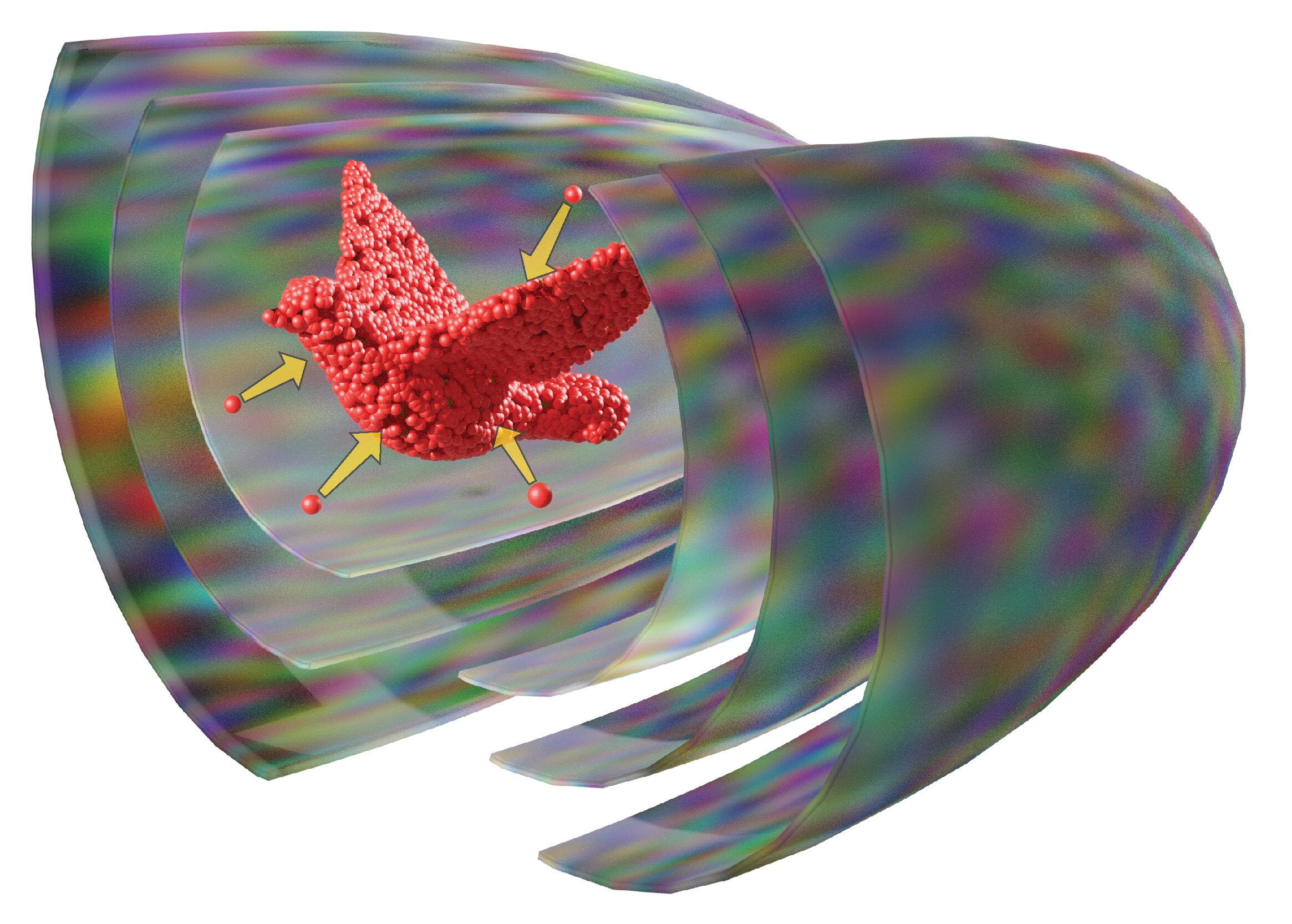
Massively parallel universal linear transformations using a wavelength-multiplexed diffractive deep neural network. Image courtesy of Ozcan Research Group, UCLA.
In today’s digital age, computational tasks have become increasingly complex. This, in turn, has led to an exponential growth in the power consumed by digital computers. Thus, it is necessary to develop hardware resources that can perform large-scale computing in a fast and energy-efficient way.
In this regard, optical computers, which use light instead of electricity to perform computations, are promising. They can potentially provide lower latency and reduced power consumption, benefiting from the parallelism that optical systems have. As a result, researchers have explored various optical computing designs.
Artistic depiction of electron transfer driven by an ultrashort laser pulse, across an interface between two atomically-thin materials. This transfer is facilitated by an interlayer ‘bridge’ state that electrons are able to access due to lattice vibrations in both materials. (Credit: Gregory M. Stewart/SLAC)
As semiconductor devices become ever smaller, researchers are exploring two-dimensional (2D) materials for potential applications in transistors and optoelectronics. Controlling the flow of electricity and heat through these materials is key to their functionality, but first we need to understand the details of those behaviors at atomic scales.
Now, researchers have discovered that electrons play a surprising role in how energy is transferred between layers of 2D semiconductor m...
Recent Comments