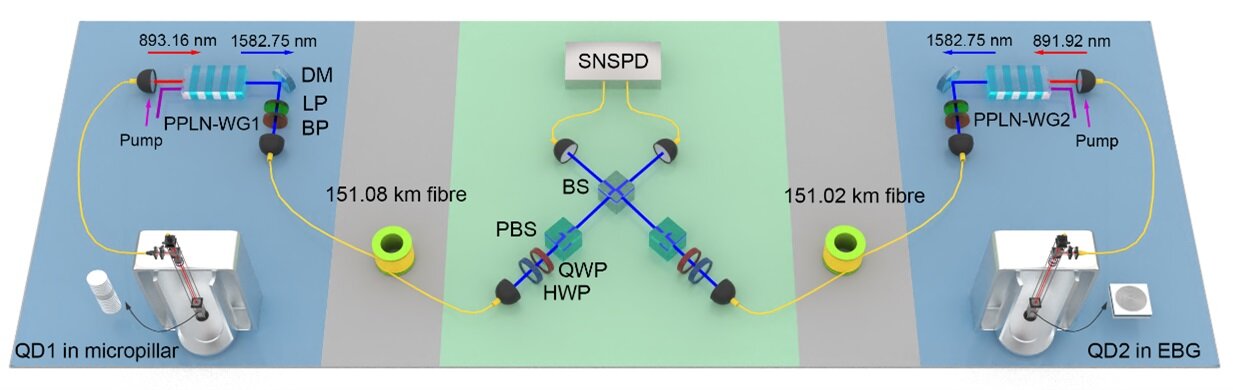
Experimental configuration of quantum interference between two independent solid-state QD single-photon sources separated by 302 km fiber. DM: dichromatic mirror, LP: long pass, BP: band pass, BS: beam splitter, SNSPD: superconducting nanowire single- photon detector, HWP: half-wave plate, QWP: quarter-wave plate, PBS: polarization beam splitter. Credit: Advanced Photonics (2022). DOI: 10.1117/1.AP.4.6.066003
This year’s Nobel Prize in Physics celebrated the fundamental interest of quantum entanglement, and also envisioned the potential applications in “the second quantum revolution”—a new age when we are able to manipulate the weirdness of quantum mechanics, including quantum superposition and entanglement...
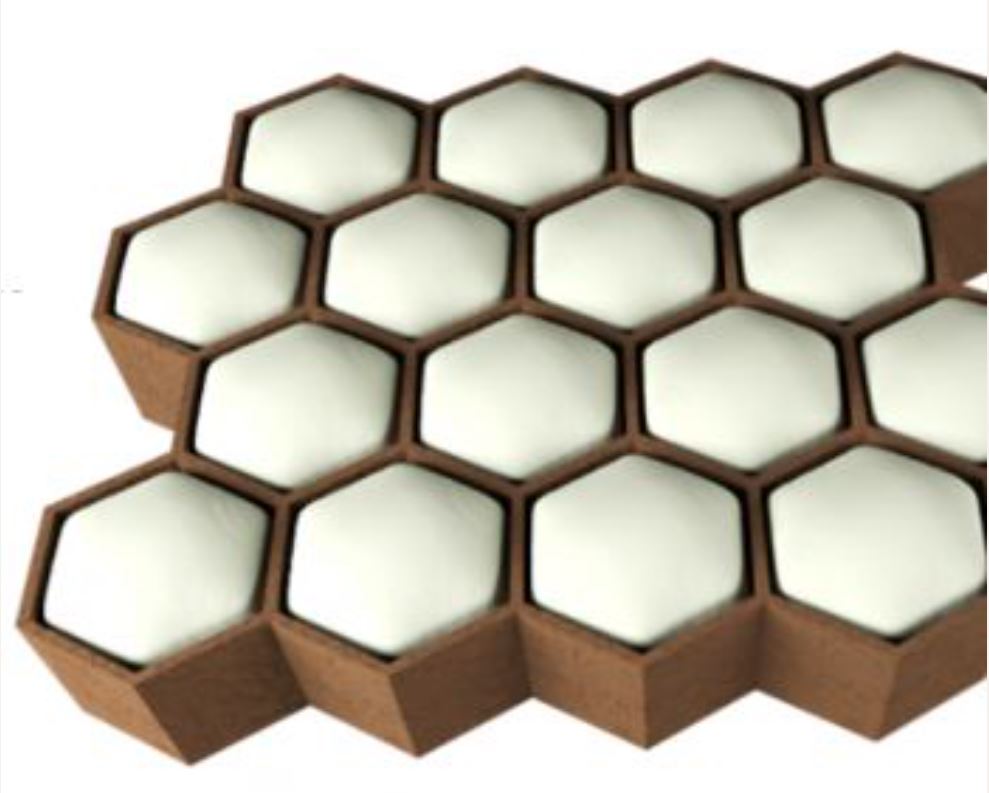
Schematic of the structure of the film with graphene oxide trapped between polymer latex sphere
In new research published in Nature Communications, University of Sussex scientists demonstrate how a highly conductive paint coating that they have developed mimics the network spread of a virus through a process called ‘explosive percolation’ – a mathematical process which can also be applied to population growth, financial systems and computer networks, but which has not been seen before in materials systems. The finding was a serendipitous development as well as a scientific first for the researchers.
The process of percolation – the statistical connectivity in a system, such as when water flows through soil or through coffee grounds – is an important component in the development of l...
A magical display that projects holographic images that change when in contact with water has been developed. This new technology increases the possibility of commercialization as it can infinitely imprint holographic images.
A POSTECH research team led by Professor Junsuk Rho (Department of Mechanical Engineering and Department of Chemical Engineering) and Ph.D. candidates Byoungsu Ko, Younghwan Yang, Jaekyung Kim, and Dr. Trevon Badloe has developed a technology for a humidity-responsive display that changes in brightness and color depending on the degree of humidity.
The team first successfully realized holographic images with tunable brightness using polyvinyl alcohol (PVA)...
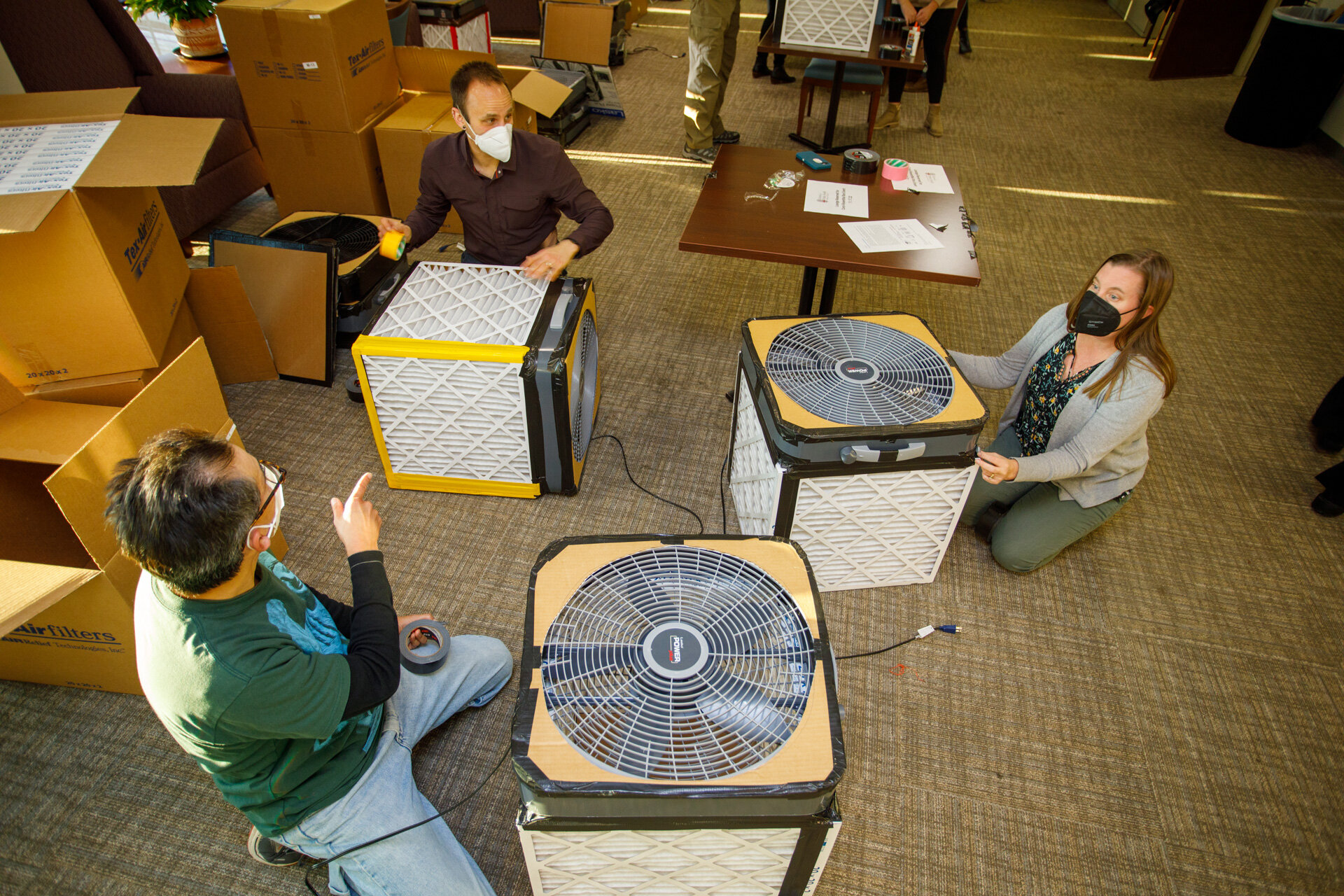
A study from researchers at Brown University and Silent Spring Institute found that inexpensive, easy-to-assemble Corsi-Rosenthal boxes can help reduce exposure to indoor air pollutants. Credit: Ken Zirkel
A team of researchers from Brown University’s School of Public Health, Brown’s School of Engineering and Silent Spring Institute found that simple air filtration devices called Corsi-Rosenthal boxes are effective at reducing indoor air pollutants.
The study, which analyzed the effectiveness of Corsi-Rosenthal boxes installed at the School of Public Health to help prevent the spread of COVID-19, is the first peer-reviewed study of the efficacy of the boxes on indoor pollutants, according to the authors.
Lowering indoor air concentrations of commonly-found chemicals known to pose...






Recent Comments