Category Physics

Hybrid Quantum Bit based on Topological Insulators

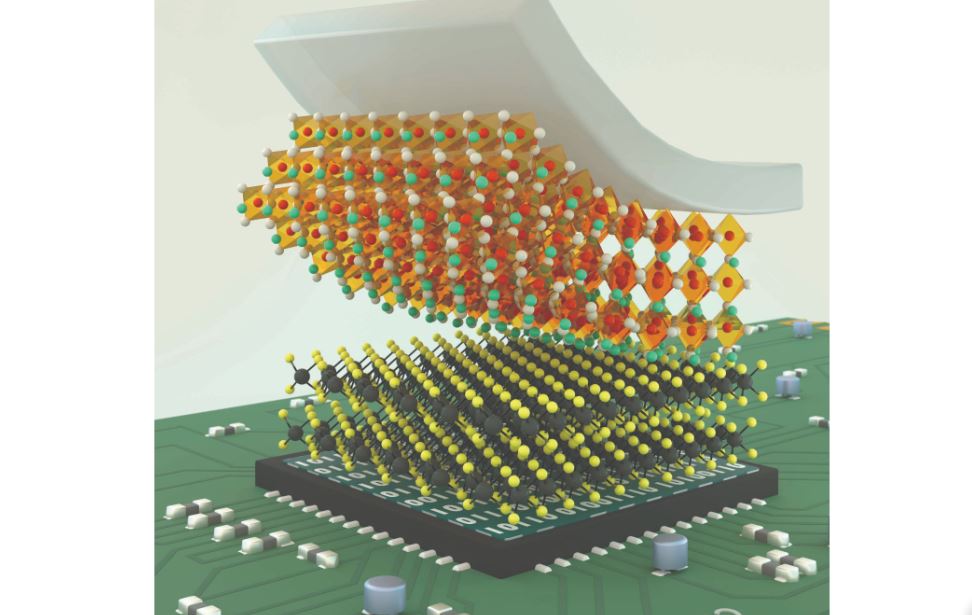
Chip with hybrid qubits
Copyright: Forschungszentrum Jülich / Ralf-Uwe Limbach

With their superior properties, topological qubits could help achieve a breakthrough in the development of a quantum computer designed for universal applications. So far, no one has yet succeeded in unambiguously demonstrating a quantum bit, or qubit for short, of this kind in a lab. However, scientists from Forschungszentrum Jülich have now gone some way to making this a reality. For the first time, they succeeded in integrating a topological insulator into a conventional superconducting qubit. Just in time for “World Quantum Day” on 14 April, their novel hybrid qubit made it to the cover of the latest issue of the journal Nano Letters.

Quantum computers are regarded as the computers of the future...

Read More

Joystick-operated Robot could help Surgeons Treat Stroke Remotely

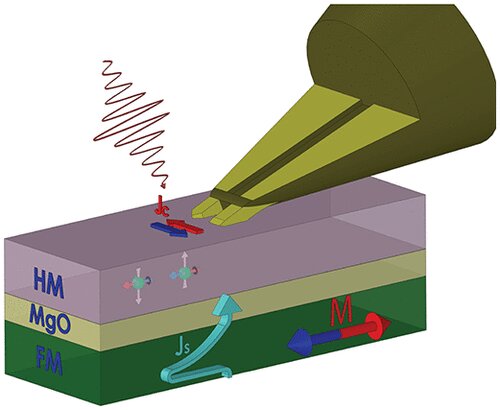
Caption:MIT engineers developed a telerobotic system to help surgeons remotely treat patients experiencing stroke or aneurysm. With a modified joystick, surgeons may control a robotic arm at another hospital to operate on a patient.
Credits:Courtesy of the researchers

The system could provide teleoperated endovascular treatment to patients during the critical time window after a stroke begins. MIT engineers have developed a telerobotic system to help surgeons quickly and remotely treat patients experiencing a stroke or aneurysm. With a modified joystick, surgeons in one hospital may control a robotic arm at another location to safely operate on a patient during a critical window of time that could save the patient’s life and preserve their brain function.

The robotic system, whose mo...

Read More

A New Heat Engine with No Moving Parts is as Efficient as a Steam Turbine

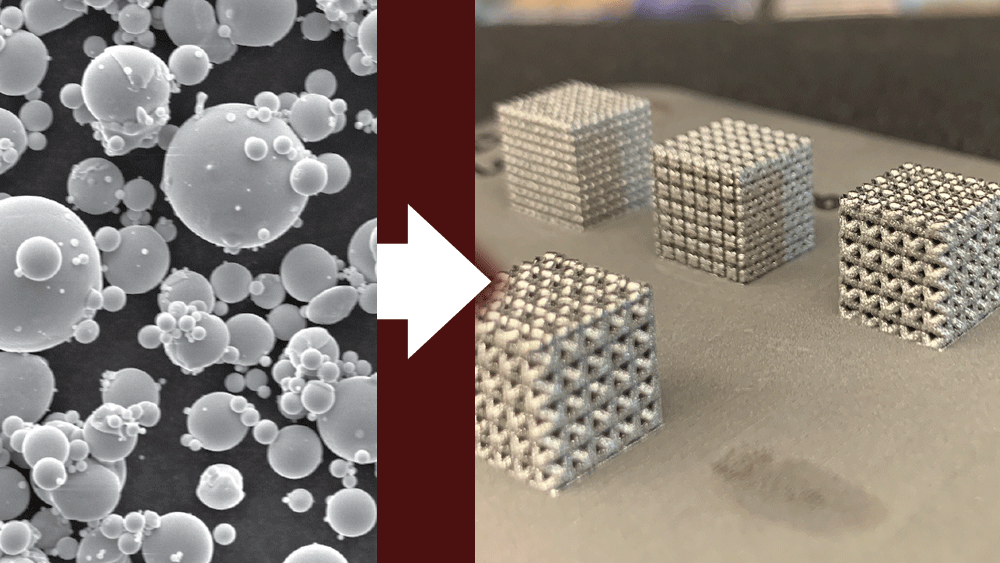
Engineers at MIT and the National Renewable Energy Laboratory (NREL) have designed a heat engine with no moving parts. Their new demonstrations show that it converts heat to electricity with over 40 percent efficiency — a performance better than that of traditional steam turbines.

The heat engine is a thermophotovoltaic (TPV) cell, similar to a solar panel’s photovoltaic cells, that passively captures high-energy photons from a white-hot heat source and converts them into electricity. The team’s design can generate electricity from a heat source of between 1,900 to 2,400 degrees Celsius, or up to about 4,300 degrees Fahrenheit.

The researchers plan to incorporate the TPV cell into a grid-scale thermal battery...

Read More

Quantum Teleportation: The Express Lane for Quantum Data Traffic

An artist’s conception of an error-correction protocol: the photons affected by environment are fixed then used to carry the data teleported into them. Credit: Maria Slussarenko

Teleportation may be a concept usually reserved for science fiction, but researchers have demonstrated that it can be used to avoid loss in communication channels on the quantum level.

The team, including researchers from Griffith University’s Centre for Quantum Dynamics, has highlighted the issues around inherent loss that occurs across every form of communication channel (for example, internet or phone) and discovered a mechanism that can reduce that loss.

Professor Geoff Pryde, Dr Sergei Slussarenko, Dr Sacha Kocsis and Dr Morgan Weston, and researchers from The University of Queensland and the Nat...

Read More