A visualization of a mathematical apparatus used to capture the physics and behavior of electrons moving on a lattice. Each pixel represents a single interaction between two electrons. Until now, accurately capturing the system required around 100,000 equations — one for each pixel. Using machine learning, scientists reduced the problem to just four equations. That means a similar visualization for the compressed version would need just four pixels. Domenico Di Sante/Flatiron Institute
Researchers trained a machine learning tool to capture the physics of electrons moving on a lattice using far fewer equations than would typically be required, all without sacrificing accuracy.
Using artificial intelligence, physicists have compressed a daunting quantum problem that until now requir...
A research team reduces power consumption by half in semiconductor devices by embedding platinum nanoparticles. The new technology extends memory by one million times and is applicable in next-generation low power devices.
Stepping stones are placed to help travelers to cross streams. As long as there are stepping stones that connect the both sides of the water, one can easily get across with just a few steps. Using the same principal, a research team at POSTECH has developed technology that cuts the power consumption in semiconductor devices in half by placing stepping stones.
A research team led by Professor Junwoo Son and Dr...
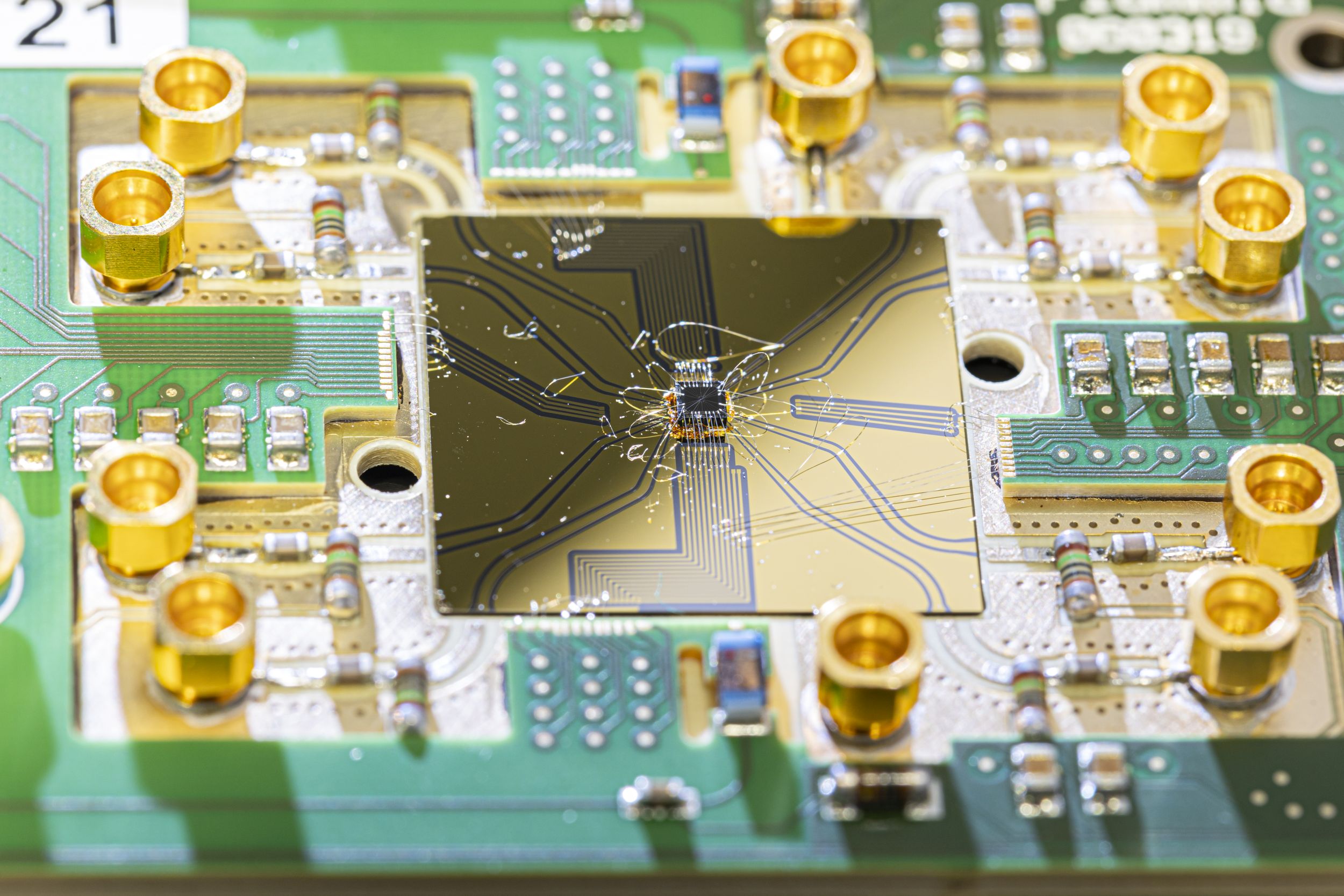
Semiconductor quantum chip with quantum bus of the JARA cooperation of Forschungszentrum Jülich and RWTH Aachen University Copyright: — Forschungszentrum Jülich / Sascha Kreklau
Physicists demonstrate electron transport on a quantum chip. Millions of quantum bits are required for quantum computers to prove useful in practical applications. The scalability is one of the greatest challenges in the development of future devices. One problem is that the qubits have to be very close to each other on the chip in order to couple them together. Researchers at Forschungszentrum Jülich and RWTH Aachen University have now come a significant step closer to solving the problem...
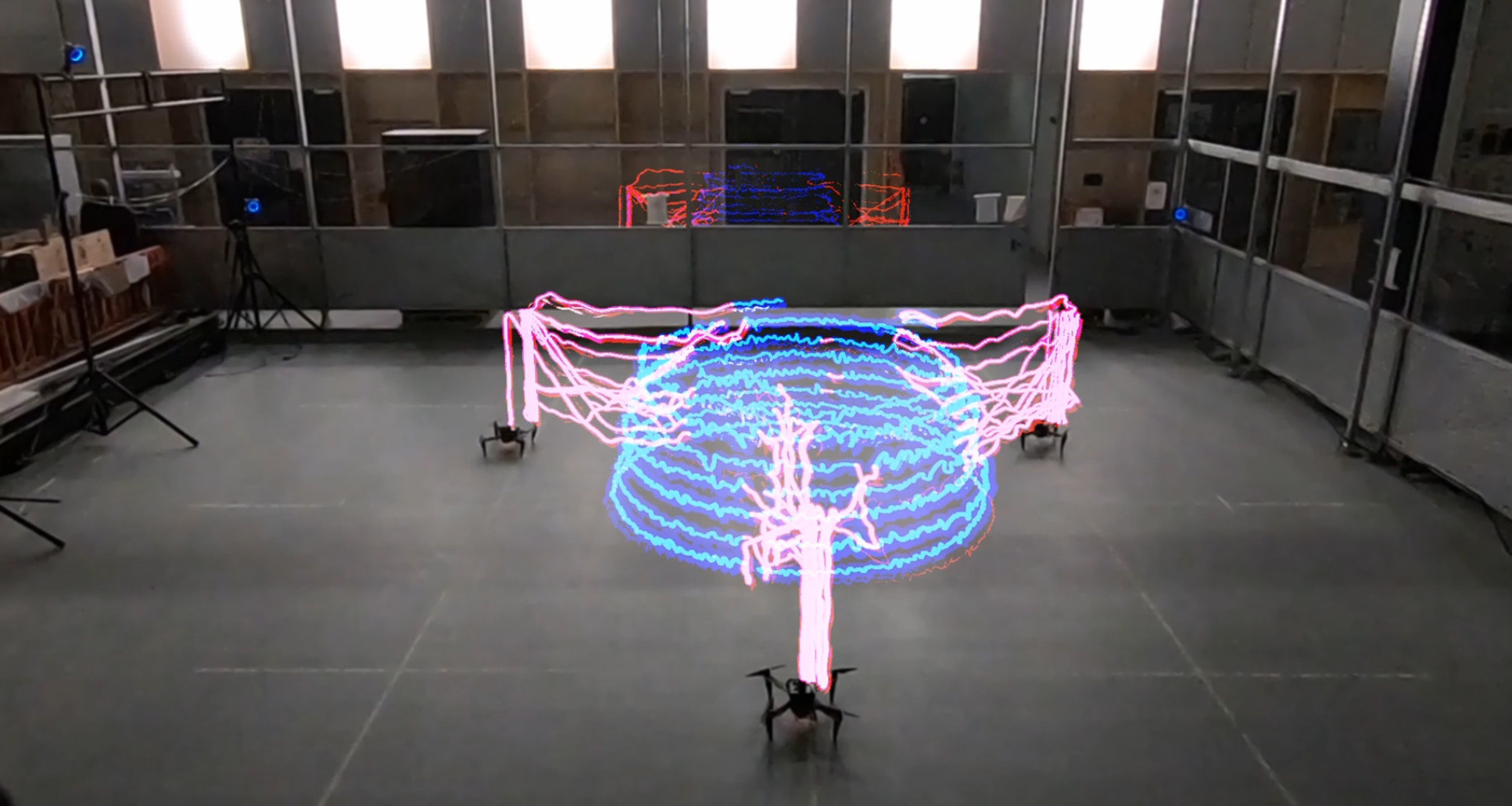
A simulation of potential future building projects. Credit: Autonomous Manufacturing Lab, UCL
The technology, which has been tested in the lab, could ultimately be used for manufacturing and building in difficult-to-access or dangerous locations such as tall buildings or help with post-disaster relief construction, say the researchers.
3D printing is gaining momentum in the construction industry. Both on-site and in the factory, static and mobile robots print materials for use in construction projects, such as steel and concrete structures.
This new approach to 3D printing – led in its development by Imperial and Empa, the Swiss Federal Laboratories of Materials Science and Technology – uses flying robots, known as drones, that use collective building methods inspired by natural ...






Recent Comments