Exploding Stars are Rare but Emit Torrents of Radiation—one close enough to Earth could Threaten Life on the Planet

Massive dying stars emit large amounts of radiation. NASA/ESA/Hubble SM4 ERO Team via AP

Stars like the sun are remarkably constant. They vary in brightness by only 0.1% over years and decades, thanks to the fusion of hydrogen into helium that powers them. This process will keep the sun shining steadily for about 5 billion more years, but when stars exhaust their nuclear fuel, their deaths can lead to pyrotechnics.

The sun will eventually die by growing large and then condensing into a type of star called a white dwarf. But stars more than eight times more massive than the sun die violently in an explosion called a supernova.

Supernovae happen across the Milky Way only a few times a century, and these violent explosions are usually remote enough that people here on Earth don’t n...

Read More

COVID-19 Research: Study reveals New Details about Potentially Deadly Inflammation

COVID-19 research: New details about potentially deadly inflammation revealed in USC study
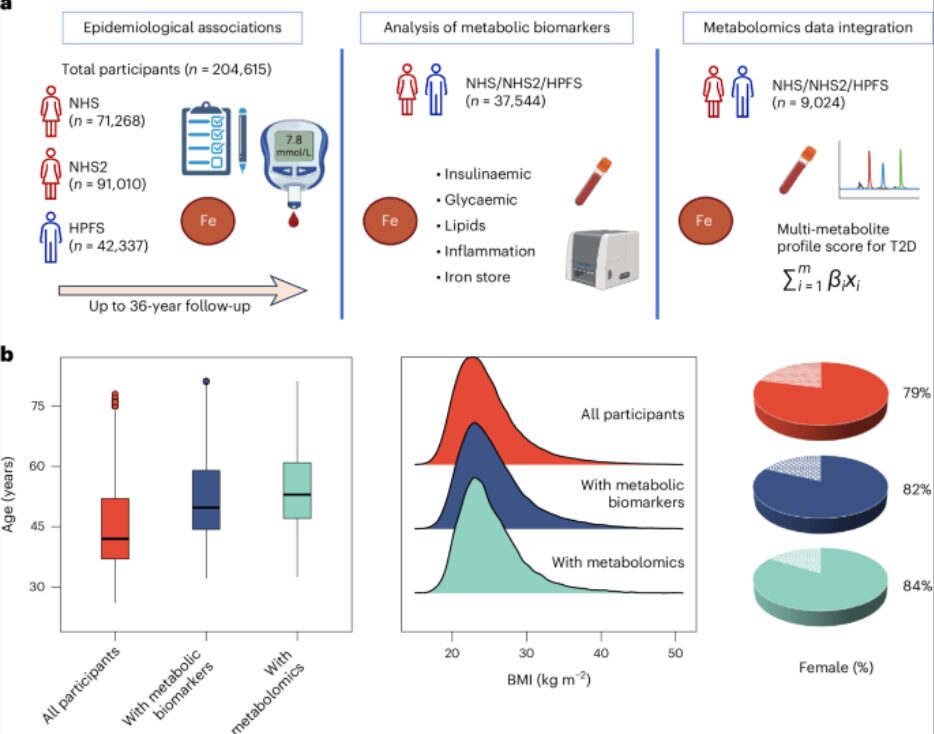
SARS-CoV-2 NSP14 facilitates the activation of NF-κB signaling and inflammatory response. a, HEK293T cells were transfected with the plasmids of 27 SARS-CoV-2 proteins, along with MyD88 and a reporter plasmid carrying the NF-κB promoter (NF-κB-Luc) and the cells were analyzed for NF-κB activity by reporter gene assay. The horizontal dashed line indicates the activation level of the positive control (EV+MyD88) group. b, Expression of the proinflammatory genes TNFA, IL1B, IL6 and IL8 in human MDMs transfected with NSP14-specific or scramble control (Ctrl) siRNA, followed with SARS-CoV-2 infection at MOI = 1 for 48 h. c, Expression of the proinflammatory genes from b in Dox-inducible SARS-CoV-2 NSP14-expressing THP-1 cells, measured after treatment with Dox (1 μg ml...
Read More

Simultaneous Performance Improvement and Energy Savings with an Innovative Algorithm for 6G Vision Services

wireless tower

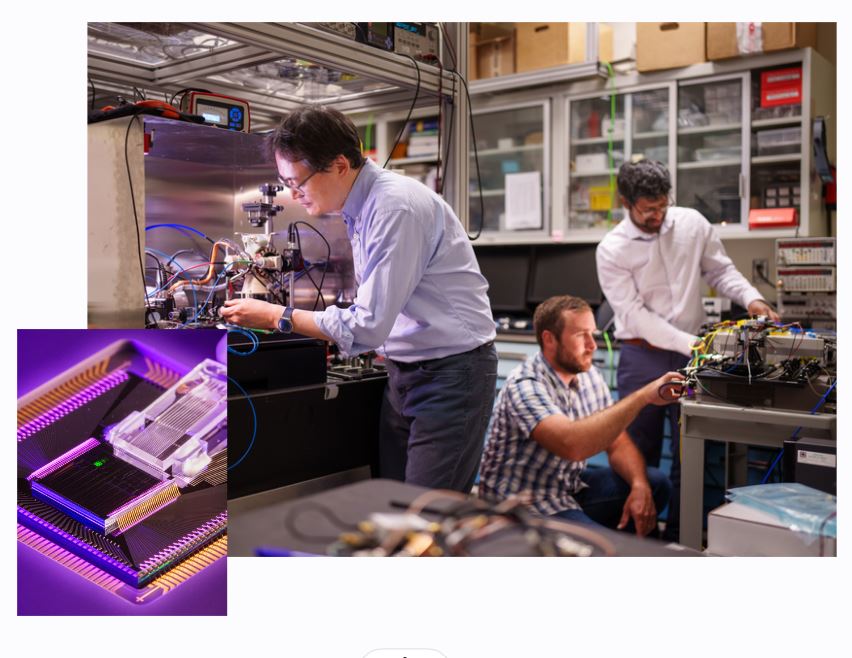
Professor Jeongho Kwak’s from the Department of Electrical Engineering and Computer Science at DGIST has developed a learning model and resource optimization technology that combines accuracy and efficiency for 6G vision services. This technology is expected to be utilized to address the high levels of computing power and complex learning models required by 6G vision services.

6G mobile vision services are associated with innovative technologies such as augmented reality (AR) and autonomous driving, which are receiving significant attention in modern society. These services enable quick capturing of videos and images, and efficient understanding of their content through deep learning-based models.

However, this requires high-performance processors (GPUs) and accurate learning mo...

Read More

Distant ‘Space Snowman’ unlocks mystery of how some Dormant Deep Space Objects become ‘Ice Bombs’

This image was taken by NASA’s New Horizons spacecraft on Jan. 1, 2019 during a flyby of Kuiper Belt object 2014 MU69. Photo by NASA/Johns Hopkins University Applied Physics Laboratory/Southwest Research Institute

A new study is shaking up what scientists thought they knew about distant objects in the far reaches of the solar system, starting with an object called the space snowman.

Researchers from Brown University and the SETI Institute found that the double-lobed object, which is officially named Kuiper Belt Object 486958 Arrokoth and resembles a snowman, may have ancient ices stored deep within it from when the object first formed billions of years ago. But that’s just the beginning of their findings.

Using a new model they developed to study how comets evolve, the researcher...

Read More