To raise new questions, new possibilities, to regard old problems from a new angle, requires creative imagination and marks real advance in science.
~Albert Einstein
Read More
Old Newtonian physics claimed that things have an objective reality separate from our perception of them. Quantum physics, and particularly Heisenberg's Uncertainty Principle, reveal that, as our perception of an object changes, the object itself literally changes.
~Marianne Williamson
Read More
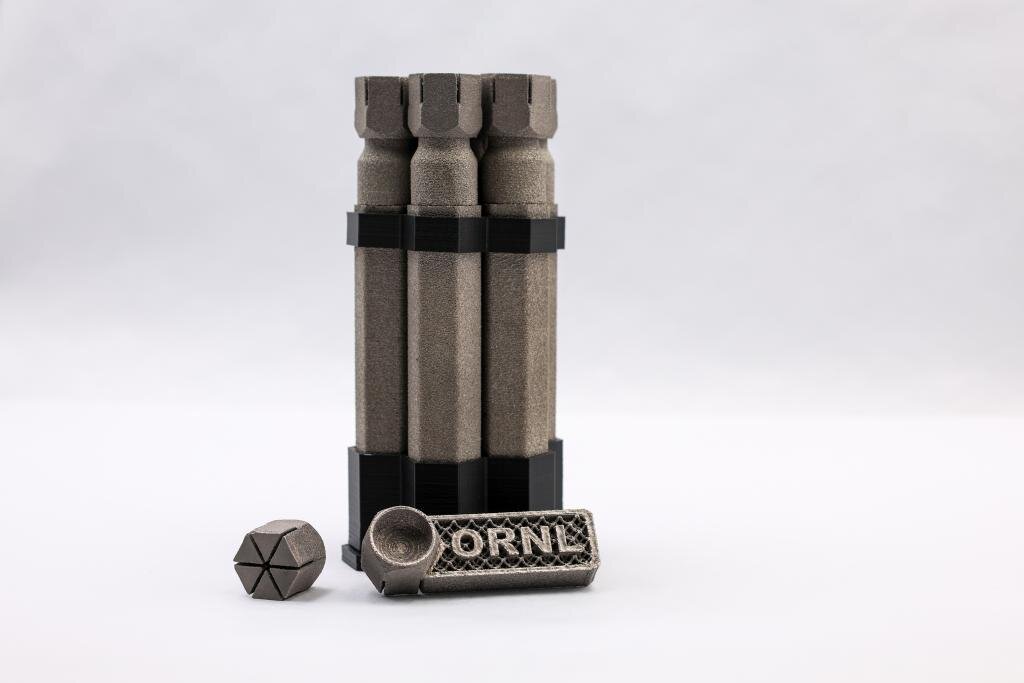
ORNL researchers used electron-beam additive manufacturing to 3D-print the first complex, defect-free tungsten parts with complex geometries. Research was performed at DOE’s Manufacturing Demonstration Facility at ORNL. The MDF, supported by DOE’s Advanced Materials and Manufacturing Technologies Office, is a nationwide consortium of collaborators working to innovate, inspire and catalyze the transformation of U.S. manufacturing. Credit: Michaela Bluedorn/ORNL, U.S. Dept. of Energy
Researchers at Oak Ridge National Laboratory used additive manufacturing to produce the first defect-free complex tungsten parts for use in extreme environments. The accomplishment could have positive implications for clean-energy technologies such as fusion energy.
This computer-generated 3D model of Venus’ surface shows the volcano Sif Mons, which is exhibiting signs of ongoing activity. Using data from NASA’s Magellan mission, Italian researchers detected evidence of an eruption while the spacecraft orbited the planet in the early 1990s. Credit: NASA/JPL
A new analysis of data collected on Venus more than 30 years ago suggests the planet may currently be volcanically active.
A research group from Italy led by David Sulcanese of the Università d’Annunzio in Pescara, Italy, has used data from a radar mapping of Venus’s surface taken in the early 1990s to search for volcanic lava flow, finding it in two regions.
The discovery suggests that volcanic activity may be currently active and more widespread than was previously thought, support...
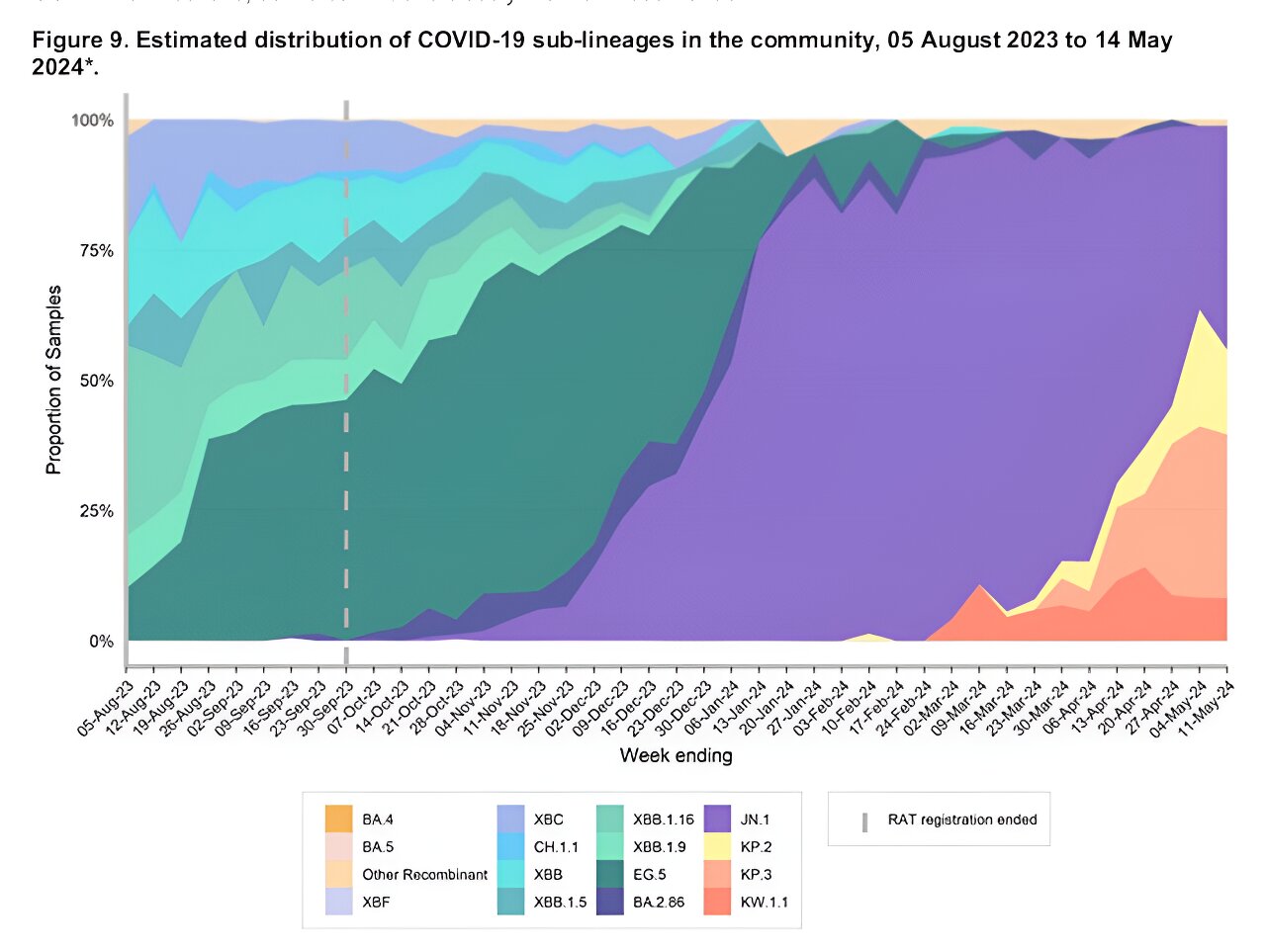
The proportion of COVID cases caused by FLiRT subvariants is rising in NSW. Credit: NSW Health
We’ve now been living with COVID for well over four years. Although there’s still much to learn about SARS-CoV-2 (the virus that causes COVID) at least one thing seems clear: it’s here to stay.
From the original Wuhan variant, to delta, to omicron, and several others in between, the virus has continued to evolve.
New variants have driven repeated waves of infection and challenged doctors and scientists seeking to understand this changing virus’ behavior.
Now, we are faced with a new group of variants, the so-called “FLiRT” variants, which appear to be contributing to a rising wave of COVID infections around Australia and elsewhere...
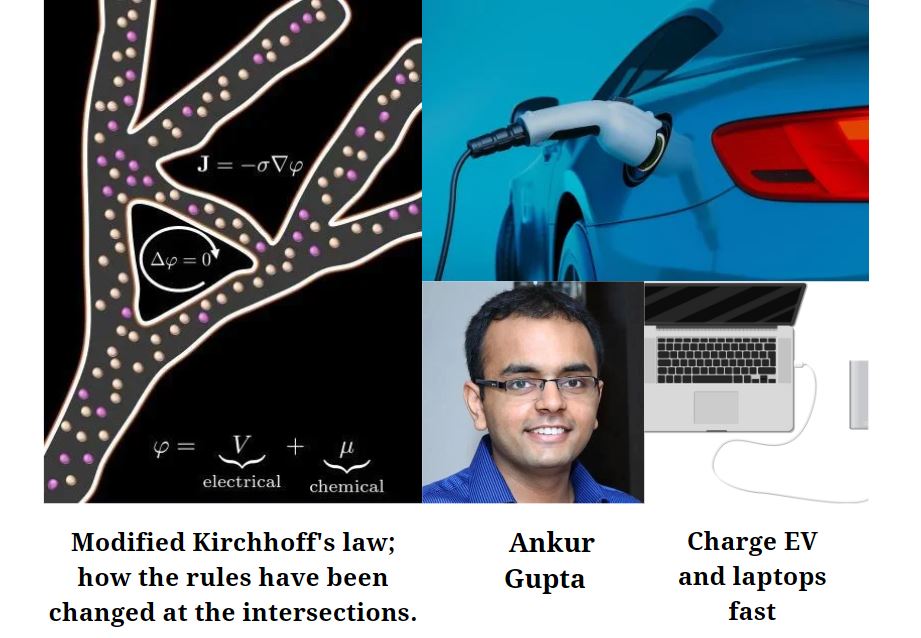
Imagine if your dead laptop or phone could charge in a minute or if an electric car could be fully powered in 10 minutes. While not possible yet, new research by a team of CU Boulder scientists could potentially lead to such advances.
Published today in the Proceedings of the National Academy of Sciences, researchers in Ankur Gupta’s lab discovered how ions, move within a complex network of minuscule pores. The breakthrough could lead to the development of more efficient energy storage devices, such as supercapacitors, said Gupta, an assistant professor of chemical and biological engineering.
“Given the critical role of energy in the future of the planet, I felt inspired to apply my chemical engineering knowledge to advancing energy storage devices,” Gupta said...












Recent Comments