Astronomers discover a Key Planetary System for Understanding Formation Mechanism of Mysterious ‘Super-Earths’

Astronomers from the University of Liège and CSIC discover a key planetary system to understand the formation mechanism of the m
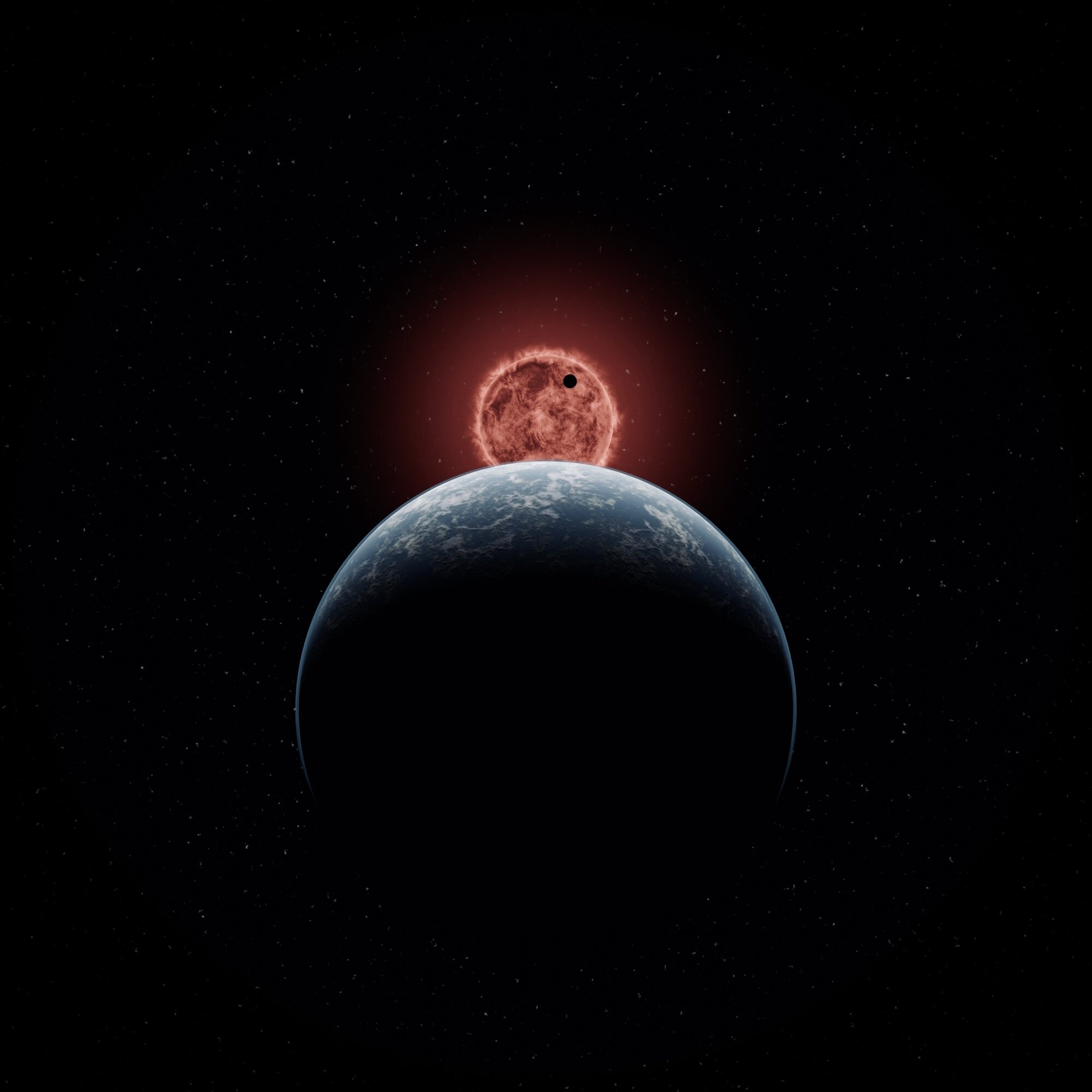
Artist’s view of the TOI-2096 system. Credit: Lionel J. Garcia / ULiège

A study led by researchers of the University of Liège and the CSIC—using observations from NASA’s TESS telescope—presents the detection of a system of two planets slightly larger than Earth orbiting a cold star in a synchronized dance. Named TOI-2096, the system is located 150 light-years from Earth.

The discovery is the result of a close collaboration between European and American universities and was made possible by the US space mission TESS (Transiting Exoplanet Survey Satellite), which aims to find planets orbiting nearby bright stars.

“TESS is conducting an all-sky survey using the transit method, that is, monitoring the stellar brightness of thousands of stars in the search for a slight dimming, ...

Read More
Researchers Map the Brain during Blood Sugar Changes

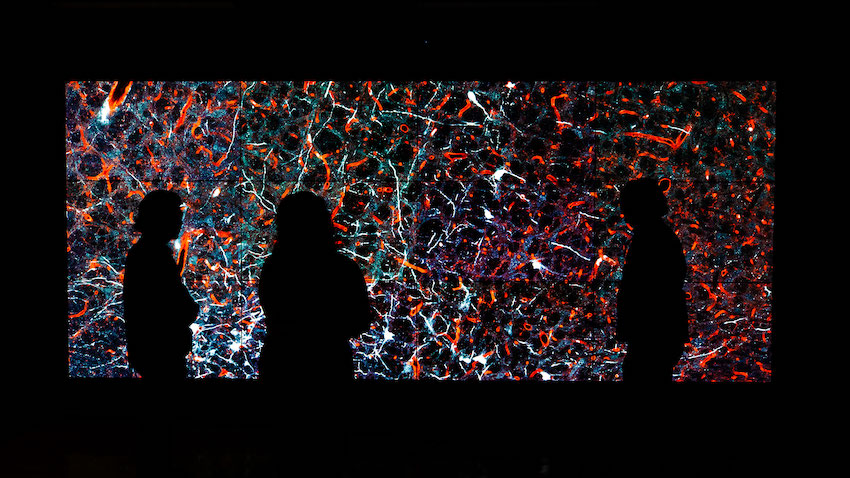
Researchers at UTEP have successfully mapped specific regions in the brain that are activated in association with changes in blood sugar — also known as glucose — providing fundamental location information that could ultimately lead to more targeted therapies for people who struggle with conditions like diabetes.

Researchers at The University of Texas at El Paso have successfully mapped specific regions in the brain that are activated in association with changes in blood sugar—also known as glucose—providing fundamental location information that could ultimately lead to more targeted therapies for people who struggle with conditions like diabetes.

The landmark 13-year study, published in the Journal of Clinical Medicine, describes how the team used careful microscopic analys...

Read More

Breakthrough in Computer Chip Energy Efficiency could Cut Data Center Electricity use

PhD student Jessica Peterson and Professor John Conley discussing the operation of one of his group’s atomic layer deposition (ALD) systems.

Researchers at Oregon State University and Baylor University have made a breakthrough toward reducing the energy consumption of the photonic chips used in data centers and supercomputers.

The findings are important because a data center can consume up to 50 times more energy per square foot of floor space than a typical office building, according to the U.S. Department of Energy.

A data center houses an organization’s information technology operations and equipment; it stores, processes and disseminates data and applications. Data centers account for roughly 2% of all electricity use in the United States, the DOE says.

According to the U.S. International Trade Commission, the number of data centers has risen rapidly as data demand has soared...

Read More

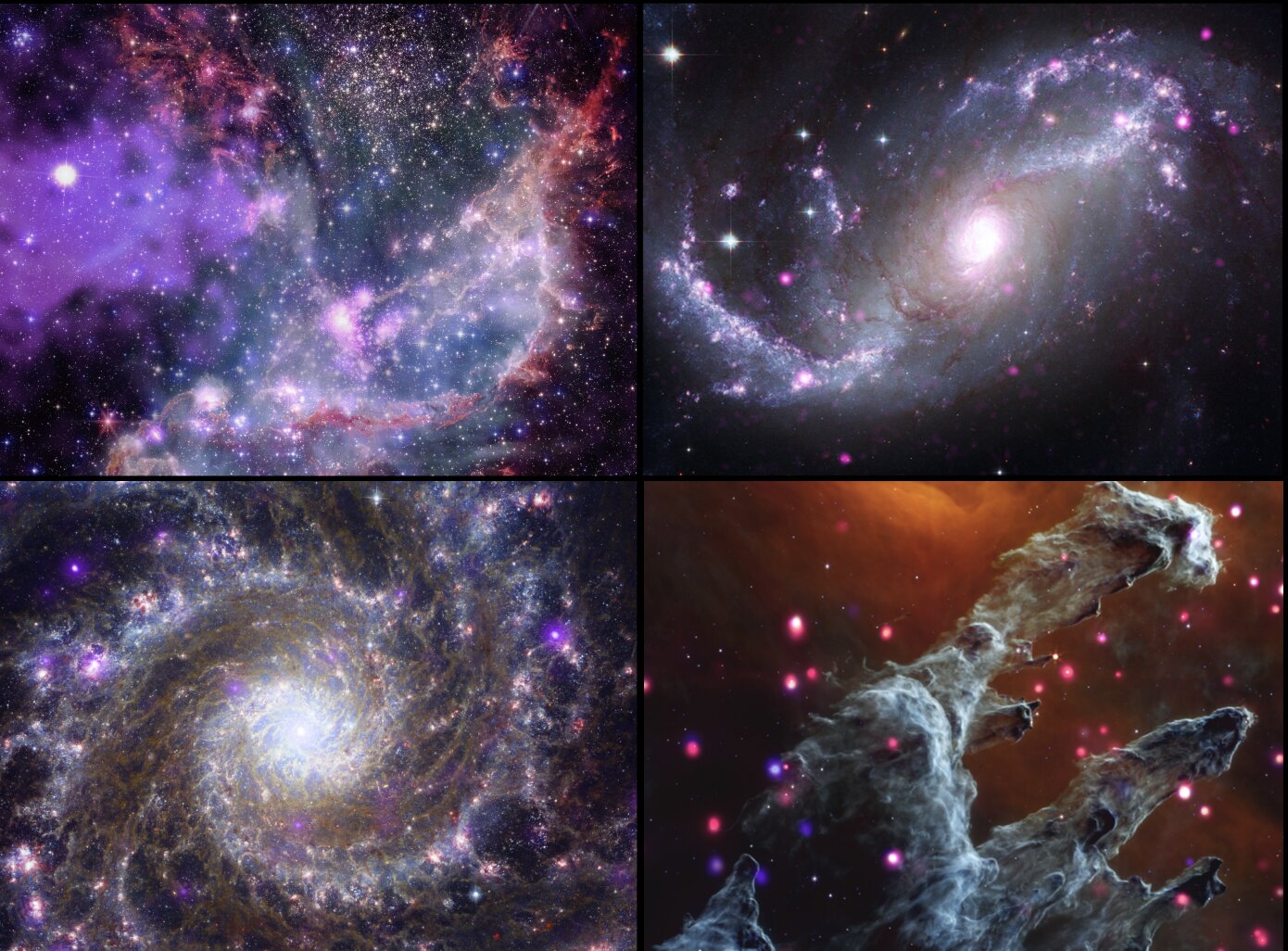
NASA’s Chandra, Webb Telescopes combine for Arresting Views

NASA's Chandra, Webb telescopes combine for arresting views
These four images show objects imaged by multiple telescopes including NASA’s Webb, Chandra, Hubble, and Spitzer. Different colors indicate different wavelengths of light, including infrared light and X-rays. Credit: X-ray: Chandra: NASA/CXC/SAO, XMM: ESA/XMM-Newton; IR: JWST: NASA/ESA/CSA/STScI, Spitzer: NASA/JPL-Caltech; Optical: Hubble: NASA/ESA/STScI, ESO. Image Processing: L. Frattare, J. Major, and K. Arcand

When multiple NASA telescopes observe the same cosmic region, the universe’s true colors are revealed.

Four composite images deliver dazzling views from NASA’s Chandra X-ray Observatory and James Webb Space Telescope of two galaxies, a nebula, and a star cluster...

Read More