regolith tagged posts

Designing in situ power stations for future Mars missions

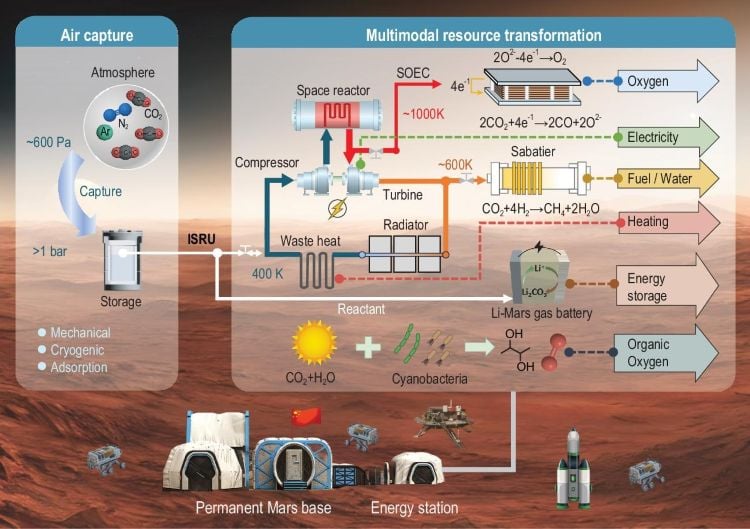
Diagram depicting how the Martian atmosphere could be used for power generation on future human missions to Mars. (Credit: Yang et al. (2026))

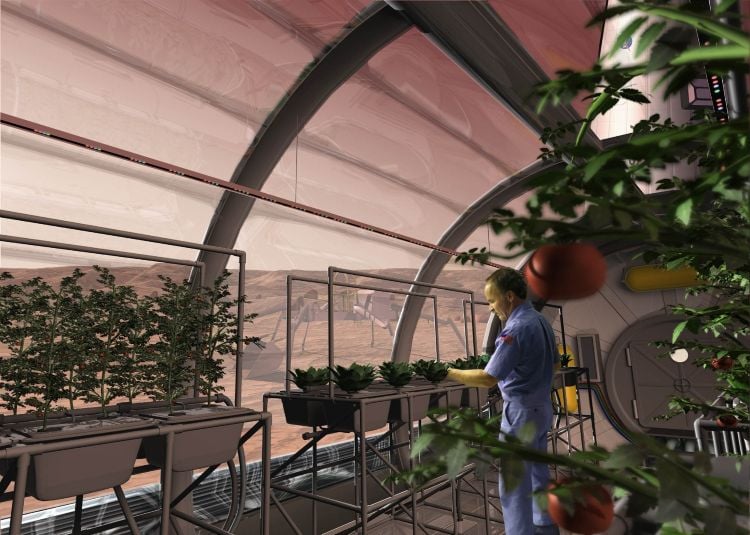
You’re in the lab analyzing Martian regolith samples within your cozy Mars habitat serving on the fifth human mission to Mars. The power within the habitat has been flowing flawlessly thanks to the MARS-MES (Mars Atmospheric Resource & Multimodal Energy System), including the general habitat lighting, science lab, sleeping quarters, exercise equipment, the virtual reality headsets the crew use for rest & relaxation, oxygen and fuel generation, and water. All this from converting the Martian atmosphere into workable electricity.

While this scenario might be decades away, scientists on Earth are working hard to make this concept a reality today...

Read More

NASA’s Micro-mission Lunar Trailblazer will make Macro-Measurements of the Lunar Surface in 2025

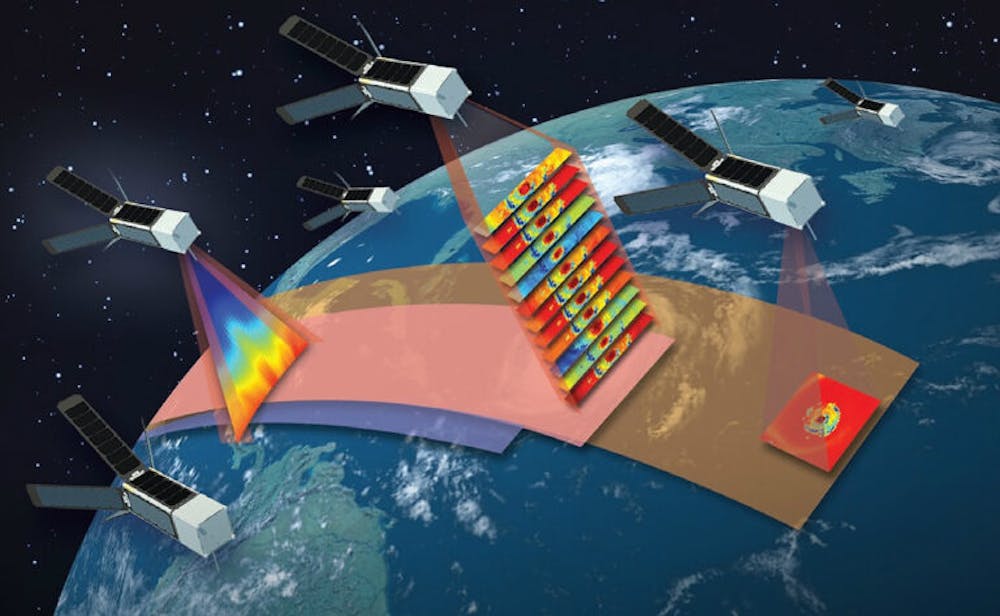
Missions like NASA’s TROPICS use a network of small satellites to take more data than one satellite would be able to do alone. NASA Applied Sciences

NASA’s upcoming Artemis II mission is slated to return astronauts to the moon no sooner than April 2026. Astronauts were last on the moon in 1972 during the Apollo 17 mission.

Artemis II will utilize NASA’s Space Launch System, which is an extremely powerful rocket that will enable human space exploration beyond Earth’s atmosphere. The crew of four will travel in an Orion spacecraft, which the agency launched around the moon and successfully returned during the Artemis I mission.

But before Artemis II, NASA will send two missions to scout the surface of the lunar south pole for resources that could sustain human space travel and e...

Read More

Lunar Mission Data Analysis Finds Widespread Evidence of Ice Deposits

Illustration of permanently shadowed regions near the lunar south pole.
This illustration shows the distribution of permanently shadowed regions (in blue) on the Moon poleward of 80 degrees South latitude. They are superimposed on a digital elevation map of the lunar surface (grey) from the Lunar Orbiter Laser Altimeter instrument on board NASA’s Lunar Reconnaissance Orbiter spacecraft.
NASA/GSFC/Timothy P. McClanahan

Deposits of ice in lunar dust and rock (regolith) are more extensive than previously thought, according to a new analysis of data from NASA’s LRO (Lunar Reconnaissance Orbiter) mission. Ice would be a valuable resource for future lunar expeditions. Water could be used for radiation protection and supporting human explorers, or broken into its hydrogen and oxygen components to make rocket fuel, energy, and breathable air.

Prior studies fou...

Read More

Thirsty on the Moon? Just throw some Regolith in the Microwave

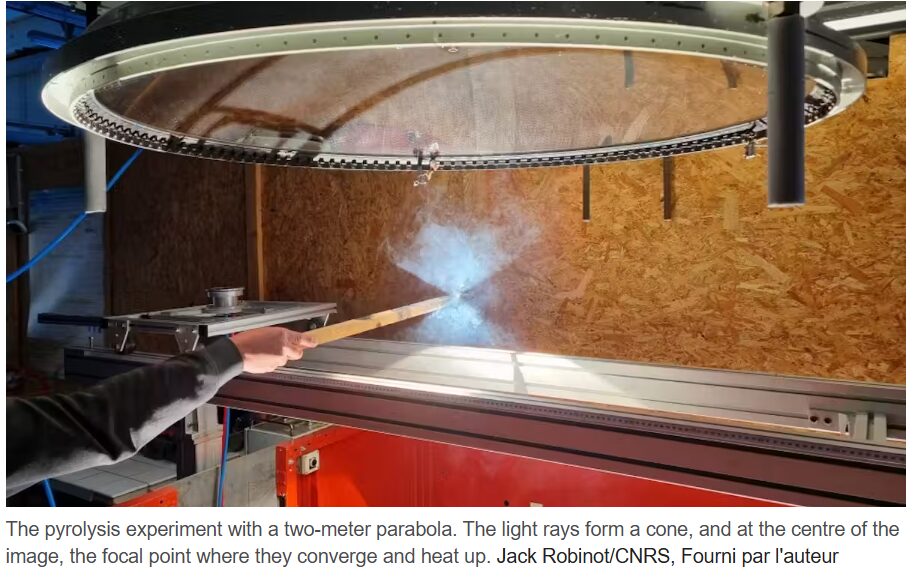
A crucible that could be used to extract water from Lunar regolith. Credit: Cole, et al

No matter where we go in the universe, we’re going to need water. Thus far, human missions to Earth orbit and the moon have taken water with them. But while that works for short missions, it isn’t practical in the long term. Water is heavy, and it would take far too much fuel to bring sufficient water to sustain long-term bases on the moon or Mars. So we’ll have to use the water we can extract locally.

Fortunately, water is a common molecule in the universe. Even the moon has plenty of water to sustain a lunar colony. The only real challenge is how to extract it. As a recent study published in Acta Astronautica shows, that might be as easy as popping things into a microwave oven.

Although wate...

Read More