spacecraft tagged posts

Could we send a spacecraft to a black hole?

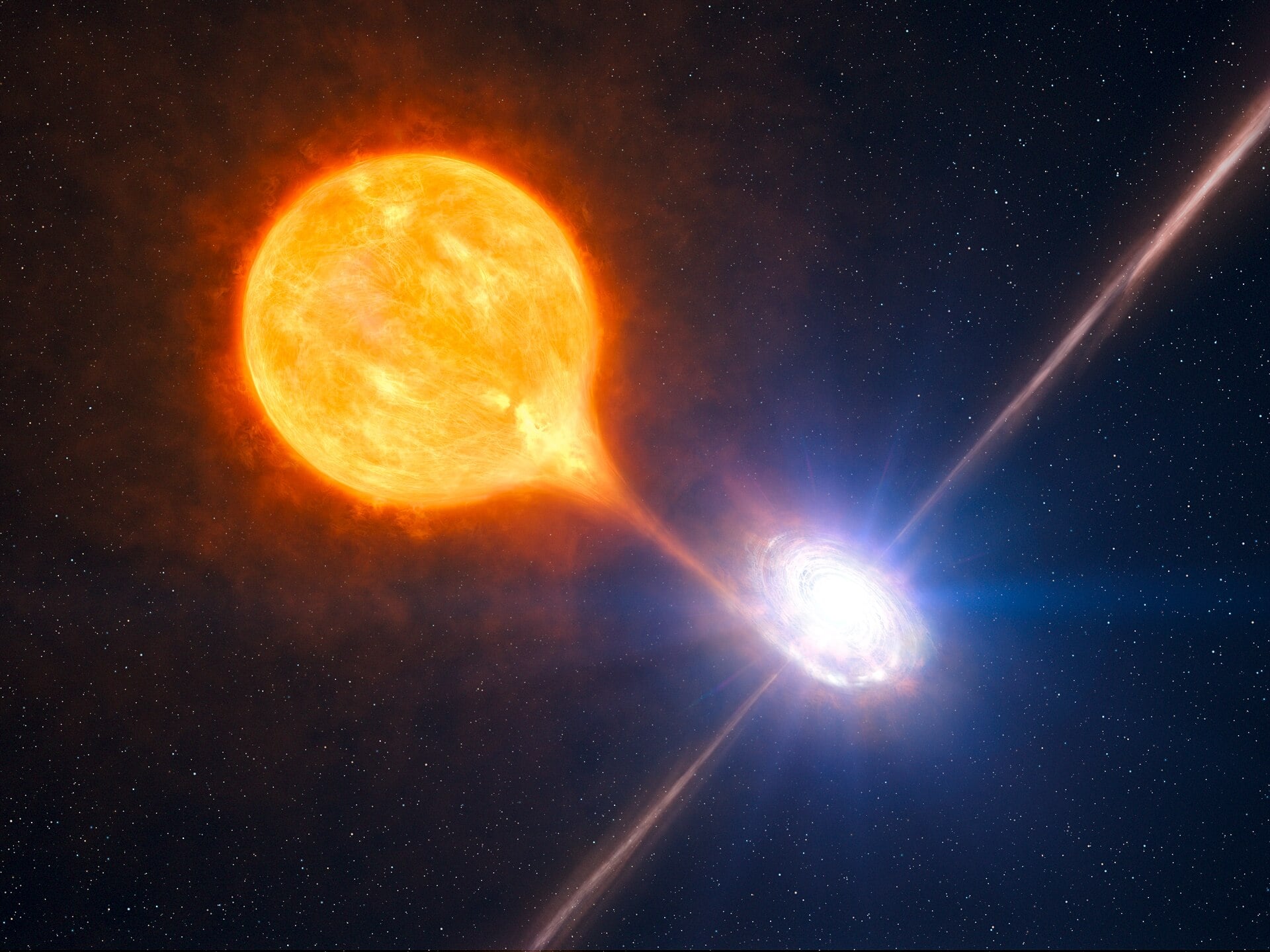
Artist's depiction of a stellar black hole in a binary system. Credit - ESO/L. Calçada/M.Kornmesser
Artist’s depiction of a stellar black hole in a binary system. Credit – ESO/L. Calçada/M.Kornmesser

Black holes represent some of the most extreme environments in the universe. They are the sources of the strongest gravitational fields, allowing us to test Einstein’s theory of general relativity to an extent impossible with small objects. But we are also reaching the limit of what we can learn about one remotely. So, various authors have put forward ideas for how we might eventually send a probe directly to a black hole to observe it up close. One of the most vocal of those authors is Cosimo Bambi of Fudan University in Shanghai—and he recently released a paper, available as a preprint on arXiv, about what it would take to send a gram-sized probe to a nearby black hole.

Unfortuna...

Read More

Space mice come home and start families

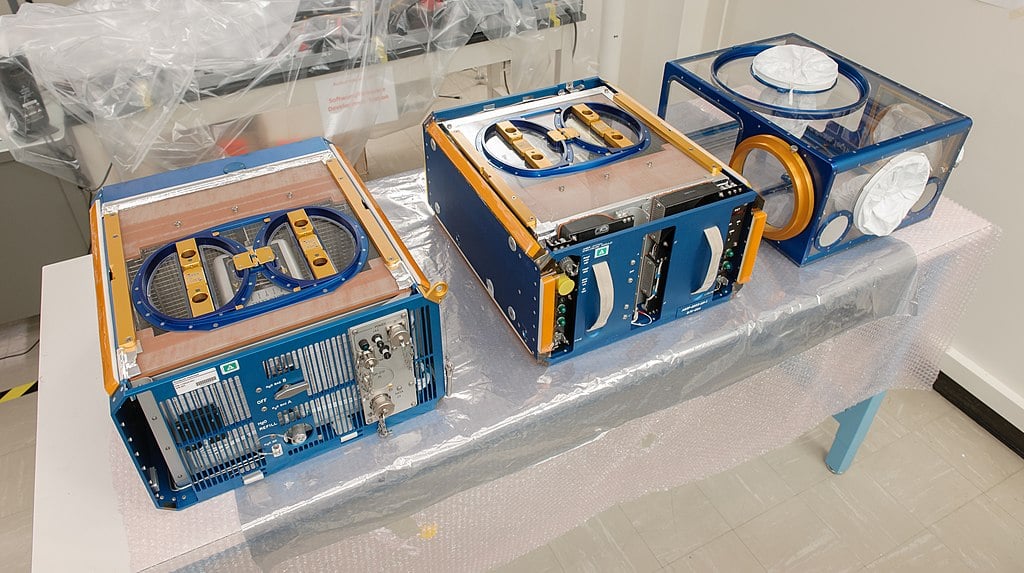
The rodent research facility for the International Space Station (Credit : NASA/Ames Research Center/Dominic Hart)

Four mice went to space as astronauts. One came back and became a mother. And that simple fact might matter more than you’d think for humanity’s future beyond Earth.

On 31 October, China launched four mice numbered 6, 98, 154, and 186, aboard the Shenzhou-21 spacecraft to the country’s space station, roughly 400 kilometers above Earth. For two weeks, the rodents lived in microgravity, exposed to space radiation and the peculiar conditions of orbital life. They returned safely on 14 November. Then, on 10 December, one of the females gave birth to nine healthy pups.

In a previous study, sperm from mice that had been in space had been used to fertilize female mice back ...

Read More

Spacecraft design gets a boost with new origami flower-like patterns

Spacecraft design gets a boost with new origami flower-like patterns
Examples of bloom patterns in different folded states. Credit: Proceedings of the Royal Society A: Mathematical, Physical and Engineering Sciences (2025). DOI: 10.1098/rspa.2025.0299

The ancient Japanese art of paper-folding, or origami, is already inspiring the design of the next generation of space vehicles, but now there’s a new family of origami shapes that could make them even more compact and reliable.

Larry Howell at Brigham Young University and his colleagues have developed a new class of origami structures called bloom patterns that fold up flat and unfold like flower petals. These clever folding designs could also be used for other structures in space, such as telescopes and solar arrays.

Origami-based designs are perfect for spacecraft because they can be made to fol...

Read More

Spacecraft can ‘brake’ in space using drag − advancing craft agility, space safety and planetary missions

When you put your hand out the window of a moving car, you feel a force pushing against you called drag. This force opposes a moving vehicle, and it’s part of the reason why your car naturally slows to a stop if you take your foot off the gas pedal. But drag doesn’t just slow down cars.

Aerospace engineers are working on using the drag force in space to develop more fuel-efficient spacecraft and missions, deorbit spacecraft without creating as much space junk, and even place probes in orbit around other planets.

Space is not a complete vacuum − at least not all of it. Earth’s atmosphere gets thinner with altitude, but it has enough air to impart a force of drag on orbiting spacecraft, even up to about 620 miles (1,000 kilometers).

As an aerospace engineering professor, I st...

Read More